
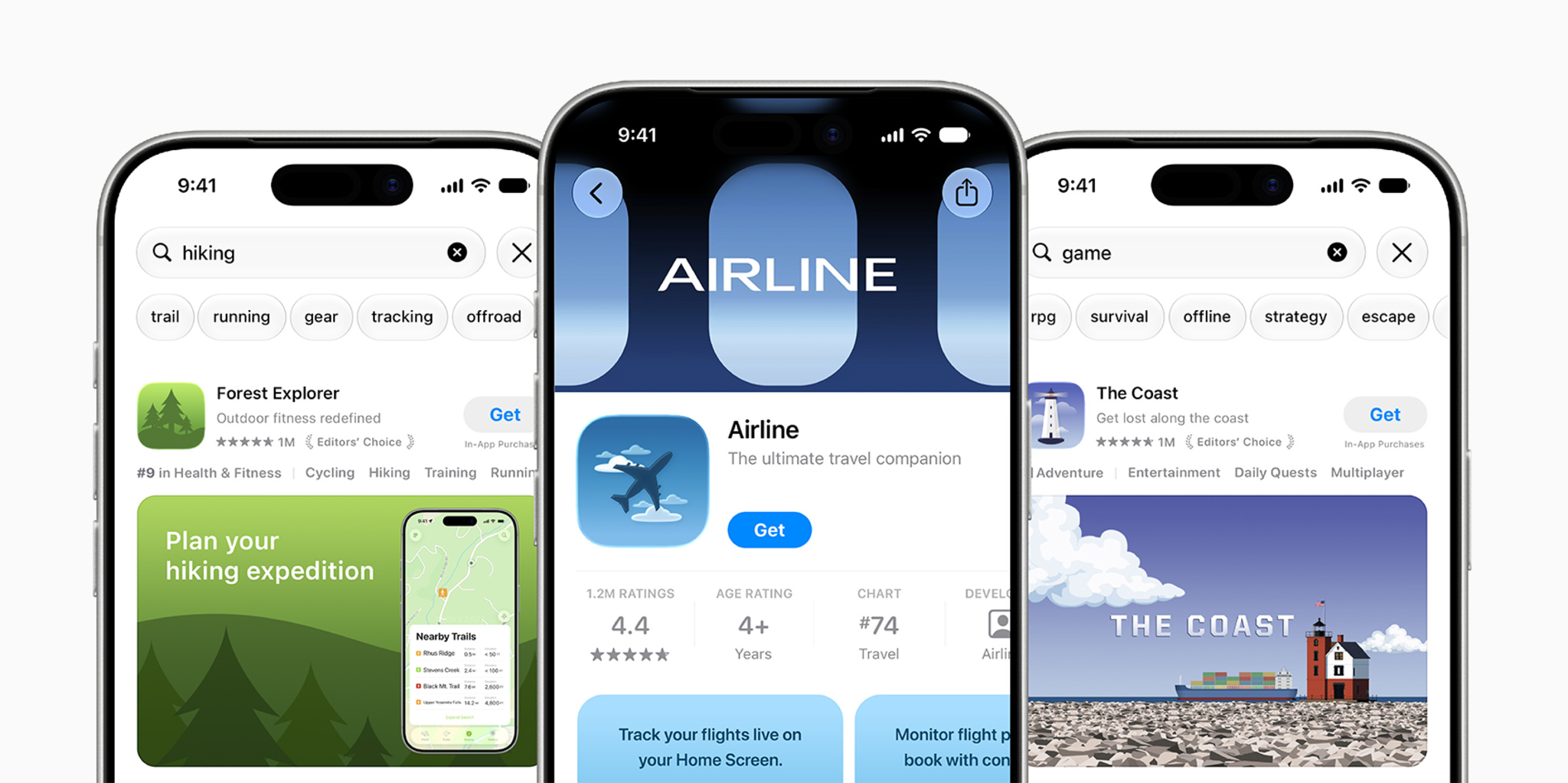
Apple announced a major expansion of visual marketing tools for mobile application developers on the App Store this fall. The upcoming updates allow creators to deploy diverse brand imagery, seasonal graphics, and promotional banners directly across high-visibility platform locations, transforming how applications present themselves to millions of active users.
Key Facts
- Apple first previewed these visual enhancements during its developer announcements in June.
- Developers can now showcase brand identity beyond standard in-app interface screenshots.
- New assets integrate into product page headers, search results pages, and In-App Events.
- Official design templates for Figma, Photoshop, and Pixelmator are now available to streamline production.
- The rollout precedes a planned autumn software launch window.
Expanding Developer Marketing Capabilities
Software distribution on mobile platforms requires precise visual communication to capture user attention within seconds. Traditional app marketplaces historically limited developers to displaying standard functional interface captures. This constraint made it difficult to communicate high-level brand values or highlight time-sensitive content updates effectively.
By introducing flexible display options, Apple grants creators the ability to construct narrative-driven marketing spaces. Teams can combine illustrative artwork with gameplay highlights to establish an immediate emotional connection with prospective users. This flexibility aligns the digital storefront experience more closely with modern digital advertising standards.
Strategic Placement Across the Ecosystem
Visibility determines discovery economics in a saturated application marketplace. The newly structured creative assets deploy across multiple critical touchpoints within the iOS ecosystem. Product page headers act as the primary billboard for incoming traffic, setting visual expectations immediately.
Search results optimization also benefits from these visual additions. When users query specific software categories, enhanced graphics provide clearer context regarding utility and aesthetic quality before a download occurs. Furthermore, In-App Events leverage these assets to announce major updates, tournaments, or media premieres directly on the storefront feed.
Optimizing Production Workflows
Adhering to strict platform design standards ensures consistent user experience across millions of active iOS devices. Apple provides comprehensive layout guidelines alongside ready-to-use digital templates for popular editing software like Figma, Adobe Photoshop, and Pixelmator. These resources eliminate guesswork regarding dimension constraints, safe zones, and text legibility.
Development studios must allocate design resources early to update their promotional collateral. Standardizing asset creation reduces friction during submission reviews and prevents display errors on varying screen dimensions, ranging from compact smartphone displays to expansive tablet interfaces.
Market Competition and Discovery
Digital marketplaces constantly evolve to improve user retention and software discovery. Independent developers and large publishers alike face intense competition for user attention. Standardized interface screenshots often blend together, creating friction in the consumer decision-making process.
Empowering studios to deploy distinct promotional visuals helps high-quality software stand out from low-effort clones. This differentiation benefits consumers by highlighting polished, actively maintained applications. Simultaneously, it provides developers with quantifiable metrics regarding which promotional visuals drive higher conversion rates.
Why This Matters
For the broader mobile economy, storefront presentation directly dictates software success and developer revenue. When platform operators expand marketing toolsets, they fundamentally alter how software discovery functions. Developers who quickly adopt these new creative assets gain a distinct competitive advantage in user acquisition efficiency, while laggards risk invisibility in an increasingly crowded marketplace.
Future Outlook for Storefronts
As mobile platforms mature, the boundary between application stores and interactive media channels continues to blur. The introduction of flexible promotional assets signals a shift toward more dynamic, marketing-friendly digital distribution hubs. Future iterations may incorporate interactive elements or video-first discovery feeds.
Developers must treat storefront presentation as an ongoing marketing campaign rather than a static product manual. Embracing these new visual standards prepares teams for upcoming platform shifts as Apple continues refining the digital commerce experience.
Source: Original Article