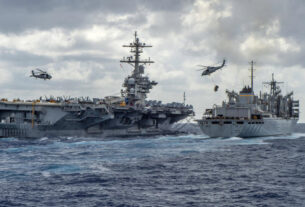

The Washington carrier strike group deploys to the Middle East on August 17, 2026. It officially relieves the USS Lincoln amid mounting crew strain. Concurrently, diplomatic channels ramp up as Jared Kushner meets with Israeli Prime Minister Benjamin Netanyahu. These parallel moves highlight the link between military posture and regional diplomacy.
Naval rotations dictate immediate deterrence capabilities. Meanwhile, private diplomatic envoys often signal backchain shifts that bypass standard State Department channels. Examining both naval logistics and informal mediation reveals the core mechanics of modern Middle Eastern foreign policy and maritime security.
Key Operational and Diplomatic Facts
- The Nimitz-class nuclear-powered aircraft carrier USS Washington is transiting to the Middle East to relieve the USS Lincoln.
- Reports highlight growing scrutiny over extended deployment timelines and harsh living conditions aboard the USS Lincoln.
- Jared Kushner arrives in Israel in an informal advisory capacity to hold direct talks with Prime Minister Benjamin Netanyahu.
- Discussions target stalled negotiations and framework proposals for resolving the Gaza conflict.
- Both military redeployment and diplomacy occur amid persistent regional instability and high international oversight.
The relief of the USS Lincoln underscores the physical toll of sustained high-readiness postures on US naval assets. Modern strike groups require precise rotation schedules to maintain regional deterrence. When maintenance backlogs and harsh environments compromise crew welfare, the Department of Defense must execute timely handoffs to preserve combat effectiveness.
Simultaneously, the diplomatic track involving Jared Kushner operates outside traditional bureaucratic frameworks. While formal state diplomacy relies on career negotiators, informal envoys leverage personal relationships to break impasses. Direct talks with Netanyahu allow for unfiltered assessments of Israeli strategic redlines regarding Gaza.
This convergence shapes the broader geopolitical landscape. Military repositioning acts as a protective measure for service members and a signal to adversarial states. A fully operational strike group deters wider escalation while reassuring regional allies. Simultaneously, Gaza diplomatic progress impacts security calculations from Red Sea shipping to regional normalization.
International stakeholders watch these dual tracks closely. Defense analysts focus on logistics and crew readiness. Political economists analyze potential market impacts from Gaza de-escalation, which could stabilize global supply chains and lower energy price volatility.
The success of the Washington operation depends on seamless execution and easing crew fatigue on the Lincoln. On the diplomatic front, Kushner’s meetings will determine if informal channels can bridge gaps on hostage releases, ceasefires, and post-conflict governance. TayfNews.tech monitors these maneuvers through the third quarter of 2026.
Source: Original Article