
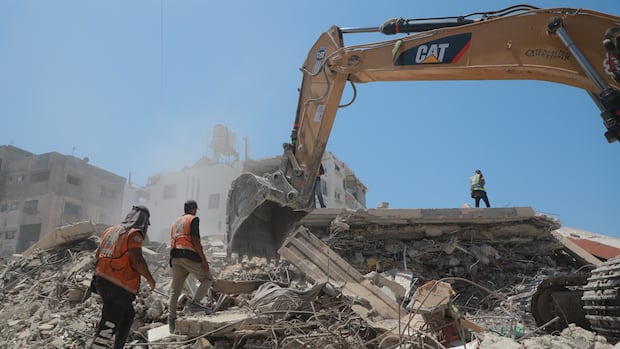
In Gaza City, a severe scarcity of Gaza heavy machinery has crippled local recovery operations as families struggle to locate missing loved ones beneath concrete ruins. Operating in conditions of extreme resource deprivation, machine operators face insurmountable logistical barriers to clear debris. The ongoing humanitarian crisis has reached a critical inflection point as vital civil engineering assets fail under prolonged operational strain.
- Uday Sabra and his father operate just two excavators in the entire Gaza Strip.
- Operations face constant delays because the machinery is aged and requires frequent repairs.
- Severe shortages of spare parts and high fuel costs paralyze day-to-day recovery efforts.
- Families desperate for closure must wait indefinitely while existing mechanical assets break down.
The Logistics of Debris Removal
Clearing collapsed infrastructure requires specialized hydraulic excavators capable of lifting multi-ton concrete slabs safely. Without these machines, manual digging yields slow results and endangers both operators and families searching for remains. The physical destruction spans millions of square meters, presenting an engineering challenge of unprecedented scale. Historical data from past urban conflicts indicates that mechanized clearance is the single most critical bottleneck in transitioning from active hostilities to stabilization.
Mechanical Failure and Spare Parts Embargo
Mechanical wear and tear normal in heavy construction work accelerates rapidly under operational stress in conflict zones. Essential replacement components, including hydraulic pumps and tracks, remain unavailable through standard commercial supply chains. Operators resort to cannibalizing broken units to keep a single machine functional, a temporary fix with a definitive expiration date. This reliance on salvaged components creates a cascading failure loop where every repaired unit eventually becomes a donor for another.
Economic Pressures on Local Operators
Fuel pricing and distribution bottlenecks dictate the operational capacity of remaining private contractors. Basic petroleum products command inflated prices due to restricted imports and border controls. Families funding these private recovery missions exhaust financial reserves rapidly, forcing operators to idle equipment despite overwhelming public demand. Stakeholder analysis reveals that while private contractors absorb the immediate financial shocks, the ultimate toll is borne by surviving civilians who cannot afford market rates for heavy recovery assets.
Humanitarian Implications of Structural Delays
The inability to recover remains prevents proper identification and burial, compounding psychological trauma for surviving relatives. Public health officials warn that unrecovered organic matter beneath rubble creates secondary environmental hazards as temperatures fluctuate. Humanitarian agencies cannot substitute private excavators because international heavy equipment shipments face strict administrative blockades. Comparative analysis with other modern urban disaster zones demonstrates that timely equipment access directly correlates with lower post-conflict mortality rates.
Future Implications and Structural Reforms
Looking ahead over the next 6 to 12 months, the lack of industrial rehabilitation assets will continue to impede basic municipal functions and public health recovery. International oversight bodies must reassess how dual-use security frameworks apply to civilian rescue hardware. If current restrictions persist, the timeline for structural clearance will extend from years to decades, leaving entire neighborhoods uninhabitable and compounding long-term psychological damage.
Why This Matters
This localized equipment failure highlights a broader structural flaw in post-conflict humanitarian response frameworks. When basic industrial hardware is classified strictly under dual-use security restrictions, civilian recovery stalls indefinitely. Addressing the Gaza excavator shortage is not merely an engineering logistics issue; it is a fundamental prerequisite for human dignity, public health stabilization, and accurate casualty documentation.
Source: Original Article