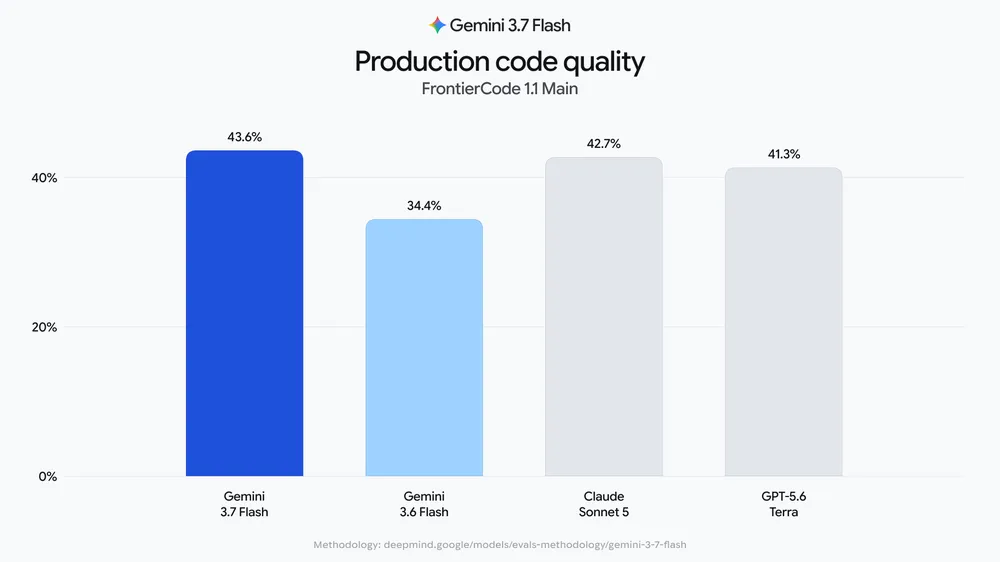
JetBrains integrated Gemini as the default artificial intelligence model for its coding assistant Junie in August 2026. This deployment brings Google’s advanced coding intelligence to development environments while introducing a limited-time 40% discount on base pricing, fundamentally changing how engineering teams budget for cloud compute infrastructure.
Software development teams face escalating operational expenses when running continuous AI inferences for code generation and debugging tasks. Flagship models deliver exceptional accuracy but exhaust cloud compute budgets before midday. The integration of a high-efficiency alternative addresses this financial friction directly, ensuring that organizations can scale their tooling without triggering unsustainable cloud expenditure.
Key Facts
- JetBrains deployed Gemini as the default engine for Junie in August 2026.
- The model offers a 40% discount on standard base pricing for a limited duration.
- Google engineered the underlying system specifically for high-velocity software engineering tasks.
- Development teams can execute routine coding duties without deploying resource-heavy flagship systems.
- The update is live for all current users within the development platform ecosystem.
Economic Realities of Software Development
Infrastructure costs dictate how engineering organizations adopt generative tools. Running large language models for every syntax completion or minor bug fix drains corporate technology budgets rapidly. Development managers must balance operational output against strict cloud computing allocations.
Utilizing top-tier models for basic scripting equates to using heavy machinery for light transport. Most daily development tasks require speed and contextual awareness rather than exhaustive parametric reasoning. Mid-tier systems bridge this gap by delivering adequate capability at a fraction of the cost. Historically, engineering teams treated AI as an unbudgeted luxury, but ballooning inference bills have forced a rigorous reevaluation of cost-per-token metrics.
The Technical Architecture of Flash Models
Google designed the Flash architecture to optimize latency and resource consumption. The system processes tokens quickly, reducing wait times for developers waiting on automated code suggestions. Speed directly influences workflow continuity within integrated development environments.
Code generation demands precise logic alongside low latency. Developers reject tools that interrupt concentration with slow generation speeds. By balancing inference velocity with reasoning depth, the model maintains high productivity levels across diverse programming languages. This technical balance prevents the cognitive friction that typically arises when developers wait on sluggish cloud-hosted inference pipelines.
Market Competition in Developer Tooling
Tool vendors continuously compete to lower the total cost of ownership for AI integration. JetBrains positions Junie as a cost-effective solution by leveraging Google’s aggressive pricing strategy. Enterprise buyers scrutinize software licensing expenses alongside underlying compute overheads.
Competitors offering similar assistance must match these economic efficiencies to retain market share. Pricing pressure drives rapid innovation in model compression and quantization techniques. End users benefit as high-performance tooling becomes accessible to smaller development teams, leveling the playing field against well-funded enterprise competitors.
Historical Context and Evolution
The trajectory of developer tooling has shifted dramatically over the past three years. Early AI coding assistants relied on massive, generalized language models that were notoriously expensive to operate. As developer adoption scaled, enterprises quickly realized that flagship models were financial liabilities for mundane tasks like auto-completing boilerplate code.
This realization sparked a race among foundational model providers to build lightweight, specialized engines. The integration of Gemini into platforms like Junie represents the maturation of this trend, moving the industry away from brute-force computing toward precision-engineered, cost-aware architectures.
Stakeholder Analysis
The economic impact of this integration ripples across multiple tiers of the software development ecosystem:
- Enterprise CFOs and Budget Managers: Beneficiaries of lowered cloud compute overheads, experiencing predictable monthly software inference expenditures.
- Software Developers: Gain uninterrupted workflow continuity with high-speed code suggestions without triggering resource alerts.
- Junior Engineers: Expanded tool access as corporate guardrails relax due to reduced operational costs.
- Legacy AI Tool Vendors: Face severe market pressure to slash pricing structures or lose enterprise accounts to cost-optimized alternatives.
Future Implications and Comparative Outlook
Looking ahead over the next 6 to 12 months, the software industry will likely see automated orchestration layers become standard in developer environments. Rather than relying on a single model, future IDEs will dynamically route simple queries to lightweight engines while reserving heavy-duty reasoning systems for complex architectural problems.
Compared to previous pricing models that locked users into expensive flat-rate subscriptions or punishing token fees, the JetBrains and Google collaboration sets a new benchmark. It proves that high-performance AI can be commoditized without sacrificing the velocity required by professional engineering teams.
Why This Matters
This deployment signals a broader industry shift toward cost-conscious AI implementation. Organizations no longer default to the most expensive model for every computing task. Matching model capability to specific workload requirements prevents unnecessary cloud expenditure.
Financial sustainability dictates the long-term viability of AI-assisted software engineering. When operational expenses drop, companies expand tool access to junior developers and broader engineering departments. This democratization accelerates overall software delivery timelines across the industry.
Future Outlook for Coding Assistants
Future development cycles will feature increasingly specialized models tailored for distinct programming paradigms. Developers will route simple syntax queries to lightweight engines while reserving complex architectural reasoning for larger systems. Automated orchestration layers will handle this routing transparently.
The collaboration between JetBrains and Google sets a new benchmark for utility pricing in software tools. As discounting models evolve, economic efficiency will remain a primary metric for enterprise technology adoption.
Source: Original Article