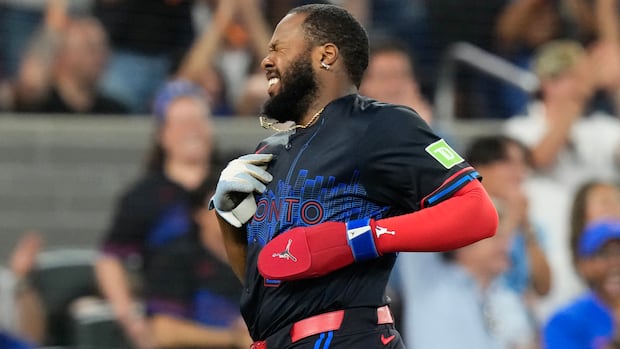
Toronto Blue Jays star Vladimir Guerrero Jr. exited a game against the New York Yankees on Friday night after a violent collision at third base. The incident occurred during the sixth inning at Rogers Centre on August 14, 2026, forcing immediate medical evaluation for the six-time All-Star.
The chaotic play unfolded following a throwing error by New York infielder Luis García Jr. As Guerrero attempted to advance, he collided with Yankees rookie shortstop George Lombard Jr. The impact sent both players to the ground, with Guerrero displaying visible discomfort before ultimately crossing home plate.
Key Facts of the Incident
- Vladimir left the game on August 14, 2026, after a collision at third base.
- The incident involved New York Yankees rookie shortstop George Lombard Jr.
- Medical staff evaluated Guerrero for a possible concussion following the impact.
- The play originated from a throwing error by Yankees first baseman Luis García Jr.
- Guerrero managed to score on the play before exiting the contest.
Medical Protocols and Concussion Evaluation
Major League Baseball enforces strict concussion protocols to protect player health. Medical staff immediately pulled Guerrero from the field to conduct neurological baseline tests. Head injuries require careful observation over a 48-hour window. Any signs of cognitive impairment will place the player on the concussion injured list.
Team trainers prioritize safety over short-term roster needs. A concussion diagnosis halts physical activity entirely. Athletes must progress through a multi-step return-to-play protocol. This process includes light aerobic exercise, non-contact drills, and full baseball activities before clearance. Historical context shows that MLB has progressively tightened these safety nets over the past decade, shifting from a culture of playing through head trauma to an ultra-conservative, science-backed protective framework.
Stakeholders in this medical process include team physicians, independent neurological consultants, and the league office, all of whom must sign off before a player returns. While fans and fantasy managers may groan at the multi-day absence, these protocols protect franchises from catastrophic liability and safeguard the long-term well-being of multi-million dollar assets.
Impact on the Toronto Blue Jays Lineup
Losing Vladimir alters the offensive dynamic for Toronto. He anchors the middle of the batting order and drives run production. Opposing pitchers alter their entire game plan to pitch around his power bat. Without him, the lineup loses significant run-producing capability.
Manager John Schneider must adjust defensive alignments and batting orders. Bench players will absorb extra innings to fill the void at first base or designated hitter. Sustained absence tests the organizational depth of the franchise. Division rivals monitor these health updates closely.
Looking ahead over a 6-to-12 month horizon, prolonged time on the injured list could force Toronto’s front office to re-evaluate their trade deadline strategies or minor league call-ups. If the star slugger misses extended time, general managers often pivot toward acquiring cost-controlled depth pieces to maintain wild-card positioning.
Rookie Involvement and Defensive Pressures
George Lombard Jr. represents the next wave of young talent in New York. High-intensity situations often lead to unintended contact during bang-bang plays. Infielders must navigate runners while securing the ball. This incident highlights the physical risks inherent in aggressive base running.
Coaching staffs continually review collision avoidance techniques with prospects. Defensive positioning rules aim to reduce high-impact collisions near bases. Despite these measures, chaotic plays remain a volatile element of the sport. Umpires review such plays to ensure adherence to obstruction regulations.
Broader Trends in Base-Running Safety
Major League Baseball continually refines rules to protect runners and fielders. Past injuries prompted stricter enforcement of the slide rule at second base. Plays at third base and home plate still present unique collision vectors. Commissioners and team executives evaluate further equipment modifications to absorb impact.
Data analytics now track player workload and fatigue metrics. Tired athletes exhibit slower reaction times during sudden defensive shifts. Teams utilize biometric sensors to monitor physical stress levels across a grueling 162-game schedule. Preventive rest periods help mitigate catastrophic injuries, transforming how modern training staffs approach daily load management.
Comparative Analysis With Past Incidents
Collisions involving star players have historically altered championship windows. When catchers were protected at home plate via rule changes in 2014, the entire landscape of plays at the plate shifted. Similarly, stricter second-base slide rules reduced leg injuries for double-play pivots. This latest high-profile collision at third base may prompt the competition committee to examine sliding lanes and tag-up pathways more critically in future rule cycles, ensuring structural safety matches modern athletic speeds.
Why This Matters
Player health directly influences competitive balance and entertainment value. High-profile injuries disrupt pennant races and fan engagement worldwide. Understanding the medical and strategic fallout provides clarity on team operations. Long-term recovery timelines dictate financial and roster commitments for front offices.
The financial stakes for modern sports franchises run extremely high. Star athletes command substantial contracts backed by insurance policies. Medical transparency maintains trust between teams, leagues, and the public. Accurate reporting ensures fans receive verified facts rather than speculation.
Outlook and Roster Adjustments
Further updates from the Toronto medical team will determine active roster availability. Subsequent games require adaptive strategies from the coaching staff. Monitoring recovery milestones remains essential for the remainder of the season. Analysts will track his return to gauge team stability and playoff readiness.