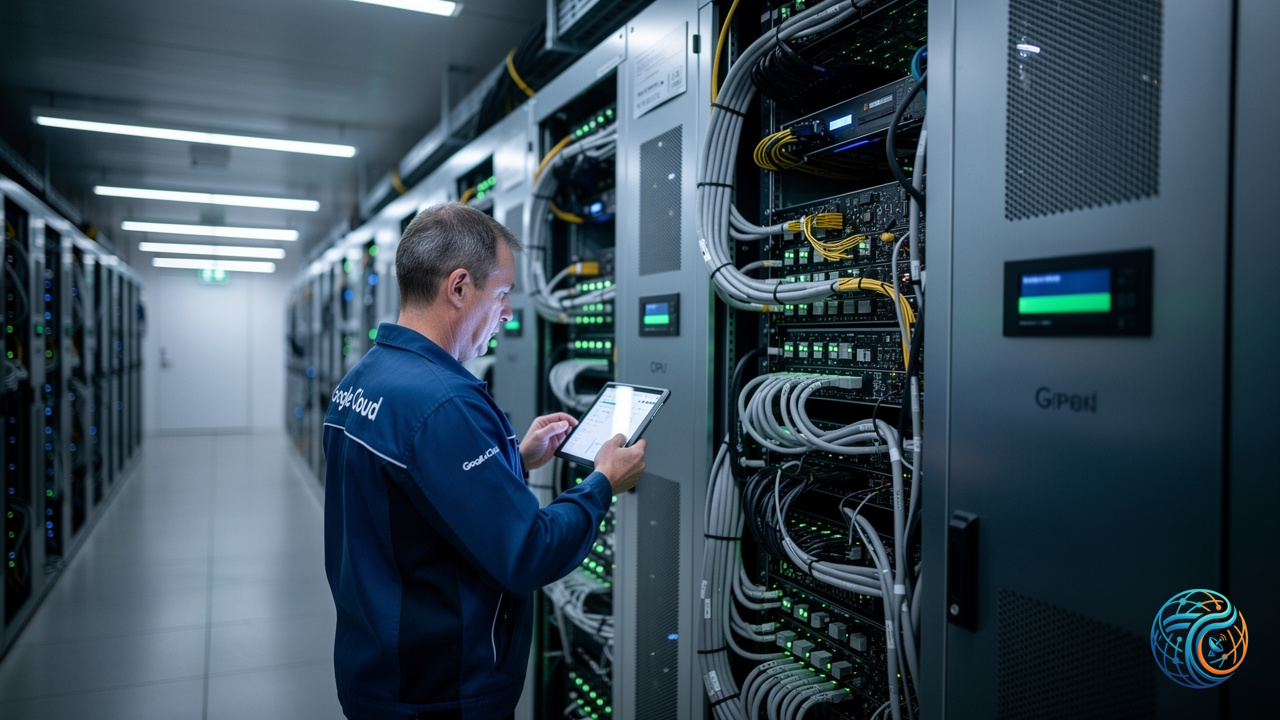
Google Cloud has officially introduced native Tensor Processing Unit (TPU) support into the vLLM serving engine, a strategic architectural update designed to allow enterprise developers to elastically scale high-demand embedding pipelines utilizing Google Kubernetes Engine (GKE). This integration addresses critical infrastructure bottlenecks in modern artificial intelligence deployments, particularly as enterprise systems pivot toward processing massive data volumes and prolonged token horizons within a single inference pass.
Overcoming Long-Context Challenges on Cloud TPU
As advanced language and multimodal models grow increasingly sophisticated, the industry demand for processing extensive contexts—such as the 15K+ token limits required by architectures like the Qwen3-Embedding-8B—has skyrocketed. Handling sequences of this scale typically introduces severe memory fragmentation, latency penalties, and numerical instability when shifting workloads away from conventional GPU architectures.
To mitigate these hurdles, Google’s engineering team implemented a suite of hardware-specific optimizations tailored directly to the architecture of Cloud TPUs:
- Hardware-safe tensor alignment: Ensures memory operations conform strictly to TPU matrix multiplication constraints, preventing silent compute stalls.
- JAX/XLA compilation pre-warming: Eliminates runtime compilation latency spikes by preparing execution graphs ahead of live inference requests.
- Hybrid StepPool architecture: Dynamically coordinates chunked prefill management to optimize throughput during heavy memory loads.
Through these targeted enhancements, Google Cloud successfully achieved near-perfect numerical parity when benchmarked against traditional reference GPU baselines. This technical alignment ensures that switching to custom accelerator hardware does not introduce accuracy drift or output degradation in sensitive retrieval-augmented generation (RAG) environments.
Immediate Availability and Developer Resources
Organizations looking to operationalize these capabilities can immediately access and deploy the new configurations. Google has open-sourced the complete setup recipes via the AI-Hypercomputer GitHub repository. These assets provide engineers with the foundational tooling necessary to construct high-throughput semantic retrieval applications capable of scaling seamlessly across elastic GKE clusters.
Source: Original Article