
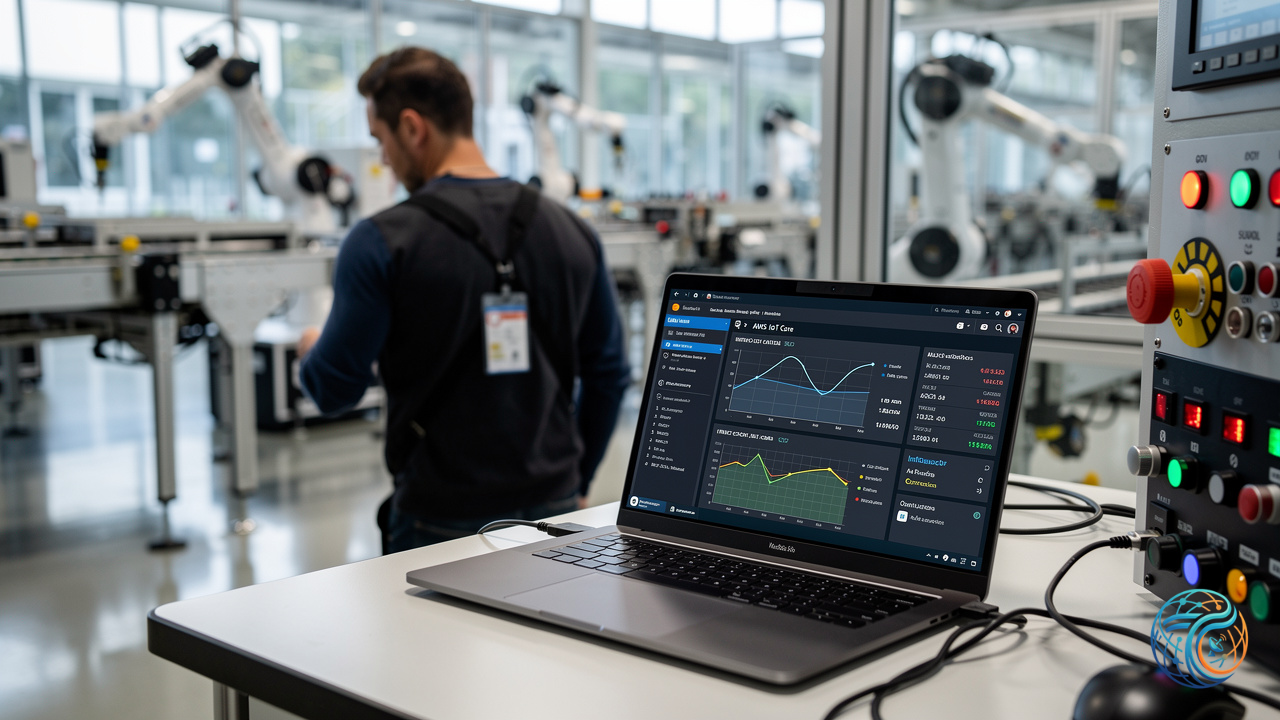
Amazon Web Services has expanded the capabilities of AWS IoT Core by introducing native routing support for InfluxDB. This integration allows engineering teams to funnel time-series data directly from edge Internet of Things devices into InfluxDB databases, eliminating custom device-side programming and intermediate cloud architecture.
Streamlining Data Pipelines for Time-Series Workloads
Managing high-frequency data streams from industrial sensors, scientific instruments, and smart infrastructure has traditionally demanded complex engineering overhead. Previously, developers often had to write custom transformation scripts directly onto edge hardware or provision intermediary microservices to parse and forward payloads into preferred data stores. The newly introduced InfluxDB rule action automates this entire lifecycle by intercepting incoming messages within the AWS IoT rules engine, transforming payloads into InfluxDB’s native line protocol format, and dispatching them securely to the target database.
This capability is designed to integrate seamlessly with both managed and self-hosted environments. Organizations can target an Amazon Timestream managed InfluxDB cluster or route their information directly to a self-hosted InfluxDB deployment depending on their enterprise infrastructure requirements. By removing intermediate translation layers, the architecture minimizes latency and reduces the operational surface area typically associated with maintaining custom data ingestion pipelines.
Flexibility Through Advanced Batching Modes
To help engineering teams balance cost efficiency against data throughput, the new rule action introduces two distinct batching configurations:
- Device-side batching: Hardware endpoints package pre-batched payloads locally before transmitting them upstream to AWS IoT Core, reducing request overhead.
- Server-side batching: The AWS IoT rules engine programmatically aggregates individual inbound messages before committing bulk write operations to the InfluxDB database.
Real-world use cases span across data-intensive sectors such as life sciences, manufacturing, and environmental monitoring. For instance, a life sciences laboratory can capture thousands of rapid telemetry readings from complex scientific equipment at sub-millisecond granularity. Using server-side or device-side aggregation, those data points stream directly into InfluxDB for continuous real-time monitoring and analytics without requiring the development of bespoke ingestion pathways.
Implementation and Regional Availability
Deploying the new functionality requires configuring an active connection between target IoT devices and AWS IoT Core, followed by defining a dedicated InfluxDB rule action. Administrators must specify the destination database endpoint alongside necessary authentication credentials and chosen batching parameters.
Amazon has confirmed that the InfluxDB rule action is available immediately across all AWS Global Regions where Amazon Timestream for InfluxDB is currently supported. Developers looking to integrate this feature into their existing architectures can consult the official developer documentation provided by AWS.
Source: Original Article