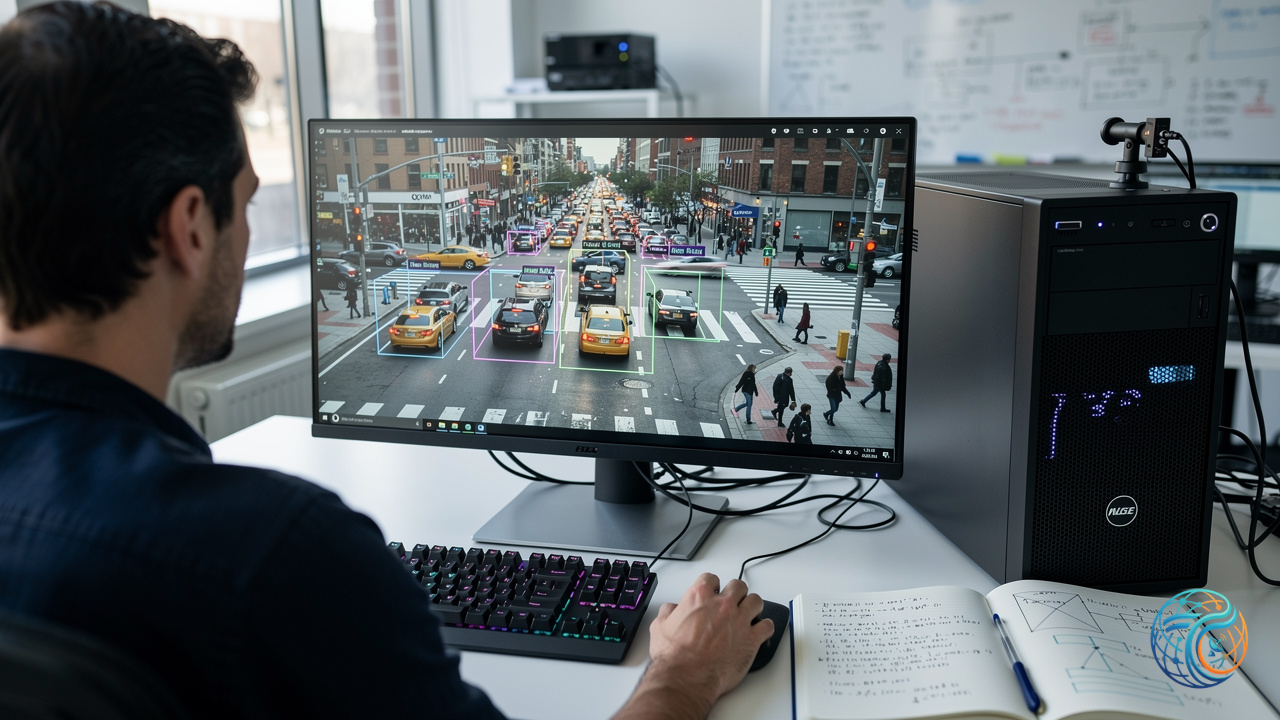
As computer vision engineering evolves, moving from theoretical architectures to hands-on deployment remains a critical hurdle for developers. Building upon foundational discussions regarding state-of-the-art object detection frameworks, recent technical guidance focuses on the practical execution of adapting these powerful systems to handle messy, real-world data environments.
Bridging Theory and Real-World Implementation
While understanding the underlying mathematics and structural design of modern detection algorithms is essential, production environments demand a shift toward execution. Engineers must navigate the transition from pre-trained baselines to customized models capable of operating reliably outside of controlled benchmark datasets. This transition involves careful dataset preparation, hyperparameter tuning, and hardware allocation.
Key Architectural Frameworks Covered
The practical methodology builds directly upon current high-performance detection paradigms, targeting architectures that define contemporary computer vision standards:
- YOLO12: Representing the latest iterations of the iconic You Only Look Once speed-optimized lineage.
- YOLO26: Continuing the evolution of high-throughput, low-latency detection frameworks.
- RF-DETR: Bringing transformer-based detection capabilities into practical production pipelines.
The Fine-Tuning Pipeline
Adapting these models to proprietary or domain-specific datasets requires a structured approach to transfer learning. Developers must evaluate annotation quality, manage class imbalances, and establish robust validation splits to prevent overfitting. By leveraging pre-trained weights, teams can significantly reduce training times and achieve superior accuracy on specialized tasks compared to training from scratch.
Source: Original Article