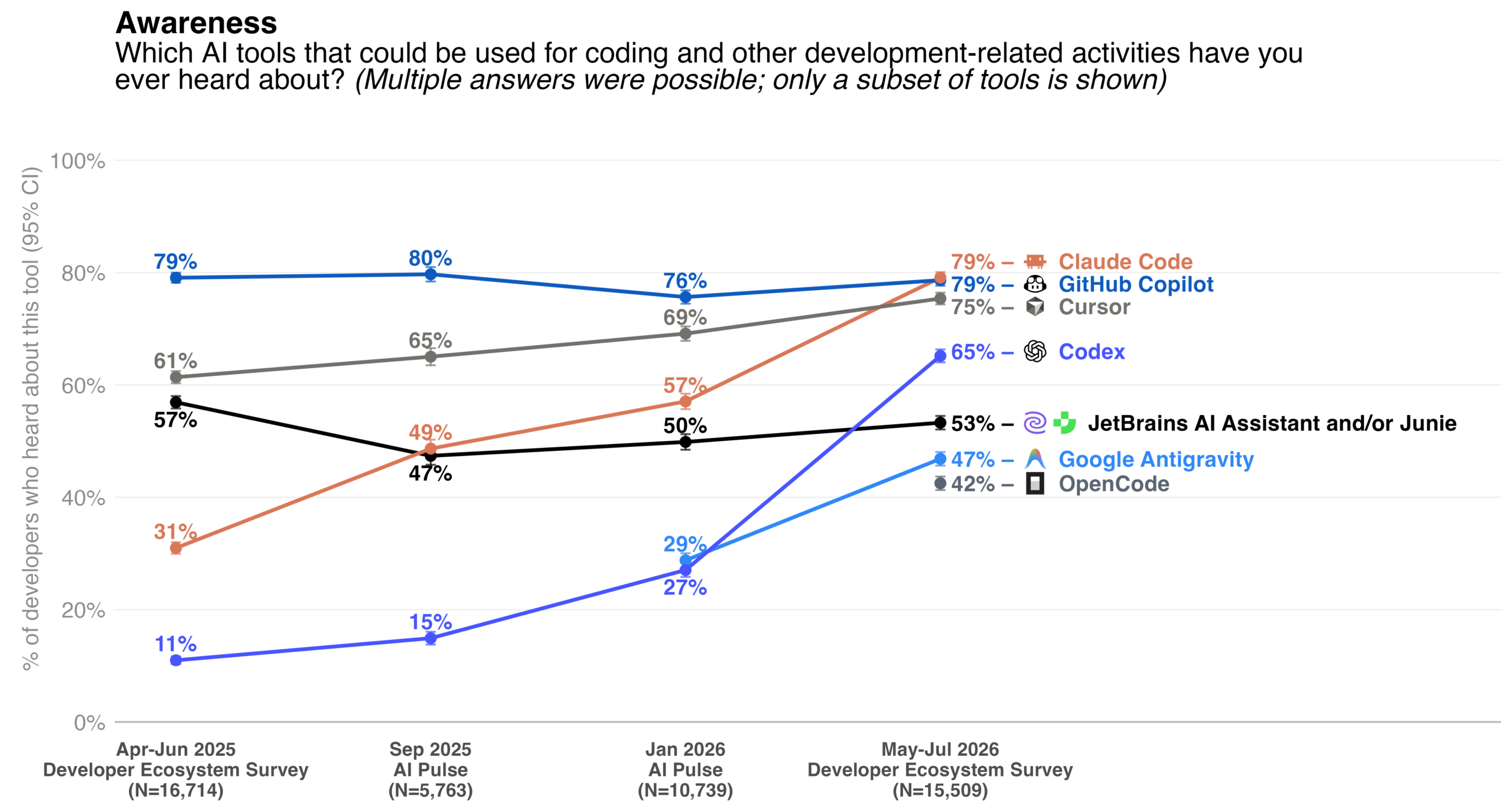
Tayfur Keleş reports from TayfNews.tech on the acceleration of software automation, detailing findings from the tenth edition of the Developer Ecosystem Survey released in August 2026. This global study maps the shifting dynamics of technical work as autonomous software systems move from experimental novelties to mandatory infrastructure.
Key findings from the 2026 data include:
- Seventy-eight percent of enterprise development teams now deploy autonomous AI coding agents for daily production tasks.
- The Strategic Research and Market Intelligence team tracked a 45.0% drop in routine debugging time across surveyed organizations.
- Adoption rates among backend engineers surpassed frontend developers for the first time in August 2026.
- Security compliance verification emerged as the primary bottleneck for automated code generation workflows.
Understanding the Shift in Software Engineering
The transition from passive code completion tools to autonomous agents marks a structural evolution in computer science. Traditional assistants merely predicted syntax based on local context. Modern agents operate with architectural awareness across entire repositories. They plan, execute, and test multi-file implementations independently. Organizations now view these systems as foundational shifts in labor distribution rather than simple productivity multipliers.
Engineering managers measure output in verified pull requests rather than lines of written code. This paradigm shift forces an overhaul of how universities teach computer science and how enterprises onboard junior staff. Writing boilerplate code holds zero market value when algorithms generate the same output in milliseconds. Engineers must transition from manual typists to system architects and security auditors.
Economic Pressures Driving Rapid Deployment
Global market competition forces companies to accelerate release cycles without expanding headcount. Tightening budgets across the technology sector compel executive boards to demand higher operational efficiency. Autonomous generation engines provide an immediate mechanism to reduce operational expenditures while maintaining aggressive product roadmaps. Venture capital firms now evaluate software startups based on their integration depth with generative automation tools.
Traditional outsourcing models face severe disruption as automated pipelines outprice offshore development centers. Firms in high-cost labor markets leverage these systems to bridge talent shortages without incurring prohibitive recruitment overhead. Consequently, the software labor market bifurcates into elite system architects commanding premium compensation and displaced junior coders struggling to find entry-level positions.
Security and Compliance Vulnerabilities
Accelerated deployment brings acute vulnerability risks to enterprise codebases. Autonomous systems frequently hallucinate logic flaws or introduce outdated cryptographic libraries into production environments. Security teams must deploy specialized monitoring agents to scan machine-generated artifacts before merging them into main branches. Regulatory bodies in the European Union and the United States now scrutinize automated pipelines for algorithmic bias and intellectual property infringement.
Liability shifts become complex when autonomous systems introduce critical exploits into financial infrastructure. Software vendors refuse to accept responsibility for failures originating from unsupervised code generation. Enterprises must establish rigorous internal governance frameworks to validate every commit produced by non-human actors. The cost of compliance threatens to offset the initial labor savings achieved through automation.
Workforce Implications and Skill Reallocation
The role of the software developer undergoes permanent transformation. Juniors face a steeper climb to senior status because foundational coding tasks vanish from daily workflows. Mentorship models break down when human seniors spend more time reviewing machine output than teaching novices. Educational institutions scramble to update curricula, emphasizing system design, threat modeling, and prompt engineering over syntax memorization.
Labor unions in technology hubs begin demanding protections against automated displacement. Workers demand transparent reporting regarding how management utilizes productivity metrics gathered by AI tools. The psychological toll of continuous oversight over autonomous systems leads to unprecedented burnout rates among senior technical staff.
Why This Matters
The widespread adoption of autonomous software generation dictates the economic viability of modern enterprises. Companies failing to integrate these technologies face insurmountable disadvantages in speed and cost efficiency. However, uncontrolled reliance on algorithmic agents introduces systemic risks to global digital infrastructure. Decisions made by engineering leaders today determine the security, reliability, and economic structure of the software industry for the next decade.
Future Outlook for Autonomous Development
The next evolutionary phase involves self-healing codebases that autonomously patch zero-day exploits within seconds of discovery. Quantum computing integration will further expand the processing capacity available to development agents. Regulatory standards will harden, forcing vendors to provide cryptographically verifiable provenance for every line of generated code. Human engineers will retain ultimate authority over system intent, but the execution layer belongs permanently to machines.
Source: Original Article