Microsoft Research has officially released Skala 1.1, an updated deep-learning exchange-correlation functional engineered to improve predictive accuracy, expand software accessibility across the computational chemistry ecosystem, and provide a living benchmark to evaluate ongoing computational performance.
Accelerating Density Functional Theory with Deep Learning
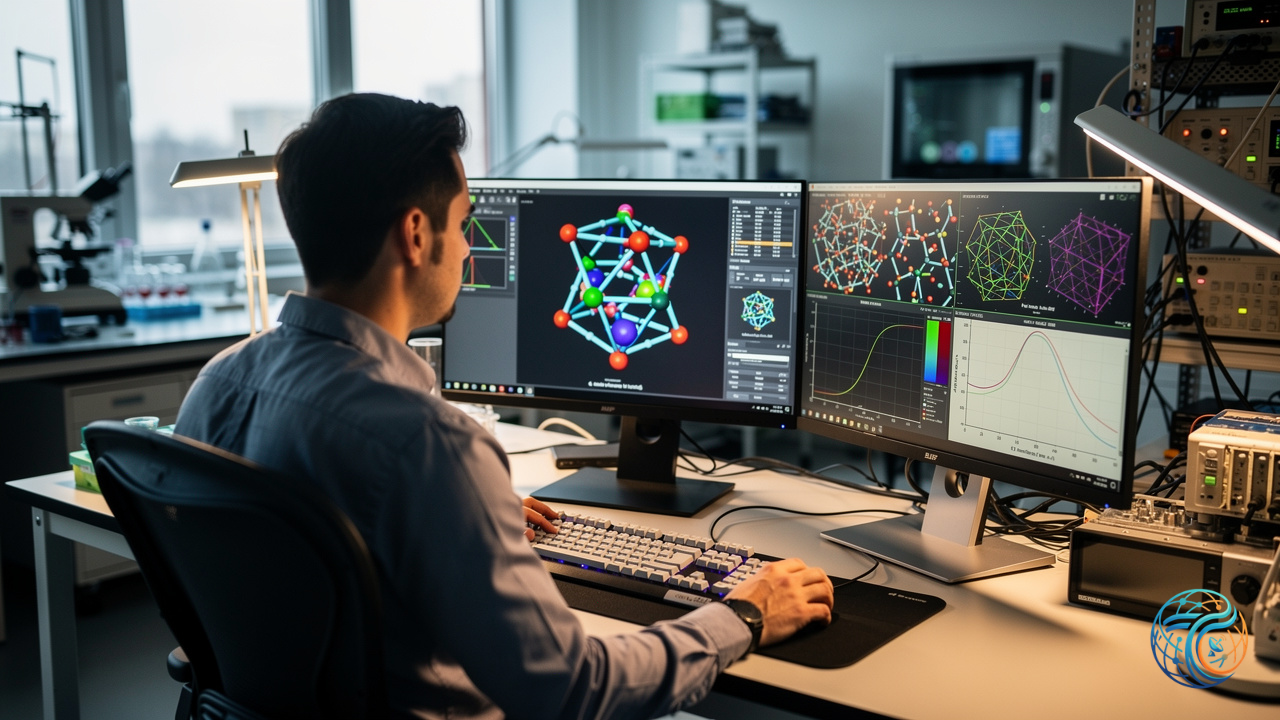
Density Functional Theory (DFT) serves as the primary computational workhorse for modern quantum chemistry, condensed matter physics, and materials science. By approximating the complex interactions of electrons within molecular and crystalline systems, DFT enables researchers to model electronic structures, reaction pathways, and material properties without executing prohibitively expensive exact quantum mechanical calculations.
However, the precision of any DFT simulation fundamentally depends on the chosen exchange-correlation functional—the mathematical component that accounts for quantum mechanical exchange and correlation effects between electrons. Standard approximations frequently force computational scientists to navigate a difficult trade-off between computational cost and physical accuracy. The integration of modern machine learning techniques has emerged as a transformative solution, allowing neural networks to model intricate electron interactions with significantly greater fidelity.
Key Advancements in Skala 1.1
Building on Microsoft Research’s pioneering work in AI-driven scientific discovery, the Skala 1.1 release focuses on three primary pillars designed to streamline advanced electronic structure simulations:
- Enhanced Predictive Accuracy: Refined neural architectures and training strategies enable Skala 1.1 to deliver higher-precision energy and property estimations across diverse chemical domains.
- Broadened Ecosystem Accessibility: The update expands integration pathways across standard computational chemistry toolkits and platforms, lowering barriers for researchers adopting neural functionals.
- A Living Benchmark Platform: Skala 1.1 introduces a continuous, dynamic benchmarking mechanism to systematically track, measure, and validate computational performance over time.
Bridging Quantum Chemistry and Machine Learning
The development of deep-learning functionals represents a paradigm shift from traditional empirical and semi-empirical modeling. Historically, researchers relied on human-derived mathematical forms categorized along the metaphorical ‘Jacob’s Ladder’ of DFT approximations. While higher rungs offer greater predictive capability, their computational demands often render them impractical for large-scale molecular dynamics or high-throughput material screening.
Deep-learning exchange-correlation functionals like Skala bridge this gap by learning directly from high-level reference data, capturing quantum many-body phenomena while retaining the execution efficiency required for complex chemical modeling. By establishing a living benchmark, the initiative also addresses a major challenge in AI for science: ensuring model robustness, reproducibility, and transparent evaluation across evolving dataset baselines.
Broader Implications for Materials and Molecular Discovery
Faster and more reliable DFT workflows hold immediate relevance for industrial and academic research sectors. Accelerating electronic structure calculations can substantially compress discovery timelines across several critical technological domains:
- Battery and Energy Storage: Simulating ion transport mechanisms and interfacial stability with quantum-level precision.
- Catalyst Design: Accelerating the discovery of novel catalytic surfaces for green chemistry and carbon capture applications.
- Pharmaceutical Discovery: Improving the accuracy of ligand-binding affinity predictions and molecular property profiling.
- Semiconductors and Novel Materials: Accurately screening electronic band gaps and structural stability for advanced microelectronics.
By delivering Skala 1.1 with broader accessibility and rigorous benchmarking capabilities, Microsoft Research continues to push the boundaries of automated, high-throughput scientific computing.
Source: Original Article