
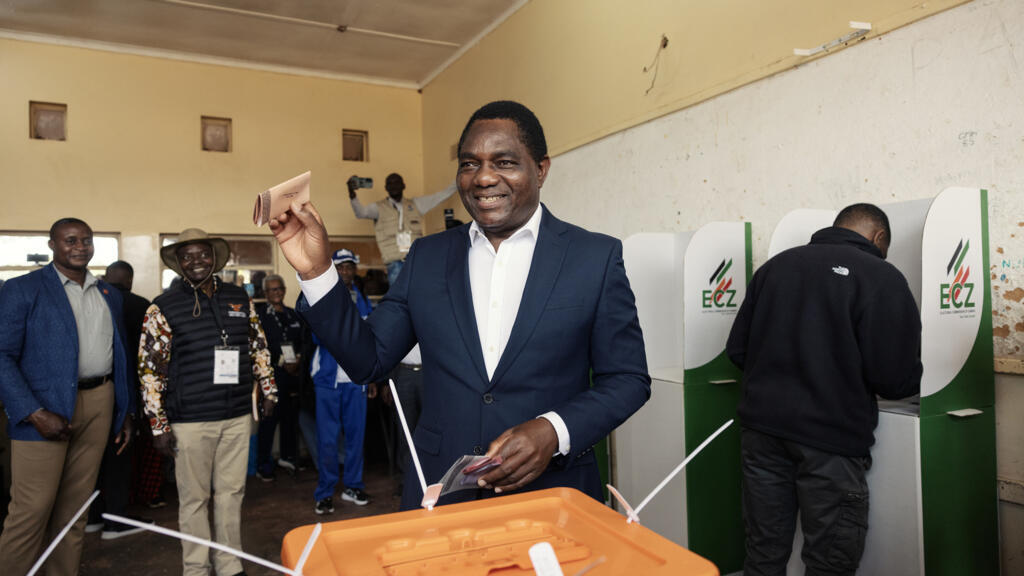
Zambian President Hakainde Hichilema secured a second term on Tuesday, August 18, 2026, following a high-stakes election centered on fiscal recovery. The 64-year-old incumbent ran on his record of stabilizing an economy battered by past sovereign debt defaults.
Key Facts About the Vote
The presidential contest across Zambia’s ten provinces was defined by distinct economic metrics and rising public discontent over living costs.
- Incumbent President Hakainde Hichilema won his second term on Tuesday, August 18, 2026, amid tight security and high voter turnout.
- The 64-year-old leader campaigned on his financial achievements, notably a complex international debt restructuring deal.
- Voters expressed deep concern over persistent poverty, high unemployment, and a lack of formal urban jobs.
- Civil society groups accused the administration of tightening political space and cracking down on dissent during the campaign.
The Macroeconomic Landscape
Hichilema initially took power promising relief from skyrocketing inflation and currency devaluation. His administration prioritized external obligations, finalizing complex negotiations with bondholders and creditors like China. These deals lowered the national debt burden, freeing funds for public infrastructure. However, macroeconomic gains have been slow to translate into household wealth.
Global financial institutions praised the government for restoring fiscal discipline under IMF guidelines. Yet, domestic markets grapple with high interest rates and currency volatility. The copper-dependent mining sector remains vulnerable to global price shifts, as foreign investors watch Southern Africa closely.
Socioeconomic Pressures and Employment
Despite praise from foreign lenders, millions face punishing living costs and scarce jobs. Youth unemployment remains a critical challenge for the incoming administration. Critics argue that economic policies favored large corporate entities over small domestic enterprises, fueling widening income inequality.
The government faces an urgent mandate to diversify the economy away from minerals. Agriculture and manufacturing offer rapid job creation potential if paired with rural infrastructure. Without improvements in household purchasing power, social tensions could rise.
Governance and Civil Liberties
The campaign highlighted growing anxiety regarding democratic norms and freedom of expression. Human rights groups noted restrictions on opposition gatherings and independent media. While officials defended these measures as necessary for public order, critics view them as an authoritarian slide.
Balancing national security and democratic pluralism is vital for Zambia’s international credibility. Foreign donors frequently condition financial aid on the protection of civil liberties and transparent governance.
Historical Context and Regional Implications
Zambia’s trajectory marks a departure from past populist economic strategies. When Hichilema took office in 2021, the nation buckled under USD 13 billion in external debt. The path to restructuring required severe austerity, setting a regional precedent for managing sovereign insolvency.
International lenders and bondholders benefit from Hichilema’s re-election, which ensures policy continuity. Conversely, urban workers and labor unions bore the brunt of austerity, fueling fierce resistance at the ballot box.
Future Outlook and What Happens Next
President Hichilema must quickly assemble a capable cabinet to address domestic grievances. Priorities over the next 6 to 12 months include targeted job creation and stabilizing the local currency. Observers will monitor whether the administration can bridge the gap between macroeconomic success and grassroots relief.
Comparative analysis suggests that failing to deliver tangible growth dividends could erode democratic institutions over time. As Zambia begins its second term, markets will watch if market reforms can coexist with inclusive human development.
Source: Original Article