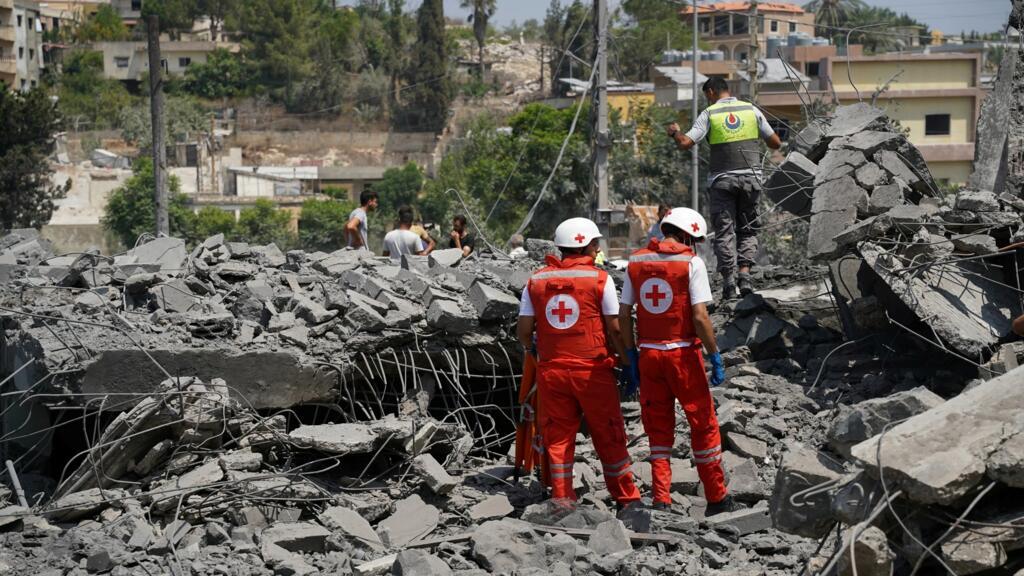
Israeli airstrikes on southern Lebanon killed 11 people on Saturday, shattering the fragile cessation of hostilities brokered in June. The military operation followed an armed confrontation by Hezbollah near the border, plunging the region back into active conflict.
Operational Timeline and Casualties
The latest casualties mark one of the highest death tolls in a single day since the summer diplomatic agreements. Defense analysts confirm the strikes targeted infrastructure used by the Iran-backed militant group, leaving emergency services overwhelmed.
- Eleven individuals died during Saturday’s bombardment across southern Lebanese districts.
- The Israel Defense Forces stated the offensive was a direct retaliation for militant aggression.
- Hezbollah leadership officially promised a forceful response to the casualties.
- International monitors report severe structural damage to civilian and commercial properties.
- Diplomatic channels between Beirut and international mediators remain strained.
Historical Context of the June Understanding
The June agreements established a fragile buffer zone that minimized cross-border rocket fire. Both state and non-state actors repeatedly tested these operational boundaries. Intelligence assessments indicated low-level skirmishes threatened to trigger a broader regional escalation, setting the stage for Saturday’s breakdown.
Saturday’s action shows that earlier deterrence models failed to hold. Military planners on both sides appear willing to absorb higher operational risks. This undermines the stability framework constructed by Western and regional diplomats.
Regional Security Implications and Stakeholder Analysis
The resumption of high-intensity strikes threatens civilian populations along the border. Dozens of residents have begun fleeing toward northern districts. Humanitarian organizations warn that prolonged hostilities will overwhelm local municipal resources within days.
Geopolitical alignments face renewed stress. Tehran maintains strong financial and operational ties to the militant faction, raising fears of secondary fronts. Neighboring states evaluate whether this flare-up will expand into a multi-theater confrontation, threatening energy corridors throughout the Levant.
Strategic Calculus of the Militant Leadership
Hezbollah faces pressure to maintain its credible deterrence posture. Failing to respond to an 11-casualty strike signals weakness to domestic rivals. Command structures have already authorized retaliatory planning cycles.
Simultaneously, the group must weigh the costs of protracted conflict. Lebanon suffers from a multi-year financial crisis limiting its capacity for infrastructure reconstruction. The leadership walks a fine line between operational pride and national ruin.
The Israeli Defense Strategy
Jerusalem views eliminating forward-deployed militant capabilities as an absolute security prerequisite. Intelligence agencies emphasize that unchecked militant buildup near the frontier poses an unacceptable threat. Military leadership authorized the heavy response to establish new rules of engagement.
This doctrine relies on disproportionate kinetic responses to deter future provocations. Military historians note such strategies often produce cyclical escalation loops. The cabinet remains resolved to secure northern territory despite international pressure.
Comparative Analysis and Future Implications
Saturday’s escalation marks a structural shift from contained deterrence to open-ended confrontation. Over the next 6 to 12 months, analysts predict heightened volatility across the Middle East, with defense markets reacting swiftly to rising risk profiles.
Why This Matters
This escalation shatters the illusion of containment relied upon by markets and diplomats since June. When fragile ceasefires collapse, supply chains, energy investments, and security architectures absorb immediate shockwaves. Understanding this dynamic helps investors anticipate shifts in Middle Eastern stability.
What Happens Next
Diplomatic missions in Beirut and Tel Aviv are frantically attempting to de-escalate the situation. Observers expect Hezbollah to launch a calibrated counter-attack soon, followed by a potential Israeli response. The trajectory depends on whether regional mediators can establish new communication channels.
Source: Original Article