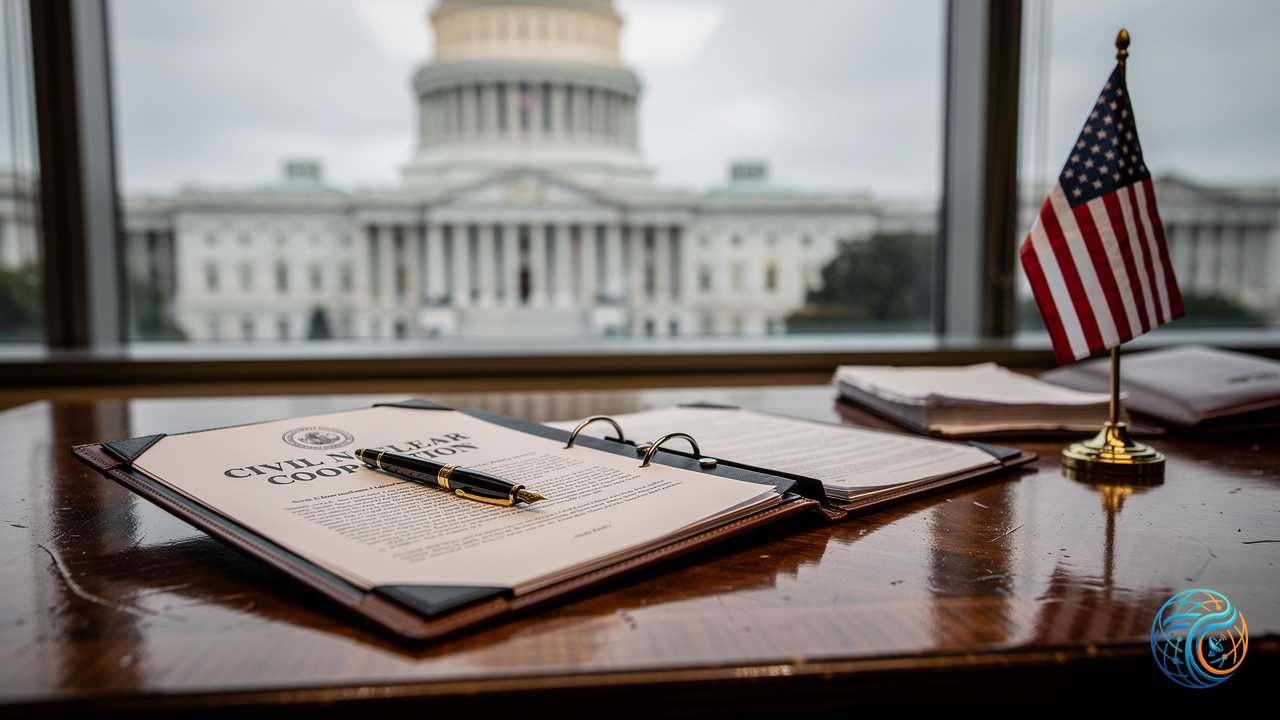
US President Donald Trump has officially submitted a civilian nuclear cooperation agreement with Saudi Arabia to Capitol Hill for legislative review, marking a significant development in Middle Eastern diplomatic and energy policy. According to an administration official, the classified pact arrived for congressional evaluation on Monday, designed specifically to support and bolster Riyadh’s domestic civilian nuclear infrastructure development.
Strategic Implications and Legislative Review
The transmission of the nuclear pact to Congress initiates a mandatory statutory review period governed by United States non-proliferation laws. Lawmakers on Capitol Hill will examine the terms of the classified text to ensure that any cooperative technological transfers align with strict American security standards and international non-proliferation treaties.
While the administration views the agreement as a vital step toward deepening strategic partnerships in the region, it faces intense scrutiny from lawmakers concerned about regional stability, technology controls, and the broader geopolitical landscape of the Middle East.
The Normalization Prerequisite
A critical stipulation embedded within the framework of the civilian nuclear agreement ties its ultimate implementation directly to broader diplomatic milestones in the region. The pact remains strictly contingent upon Saudi Arabia formally normalizing its diplomatic relations with Israel, binding high-tech energy cooperation to historic regional peace initiatives.
- Agreement Type: Civilian nuclear cooperation pact
- Classification: Classified document
- Submission Date: Monday
- Key Contingency: Normalization of relations with Israel
As the review process moves forward in Congress, international observers and technology policy analysts will be watching closely to see how legislative debate shapes the future of bilateral energy cooperation and regional diplomacy.
Source: Original Article