
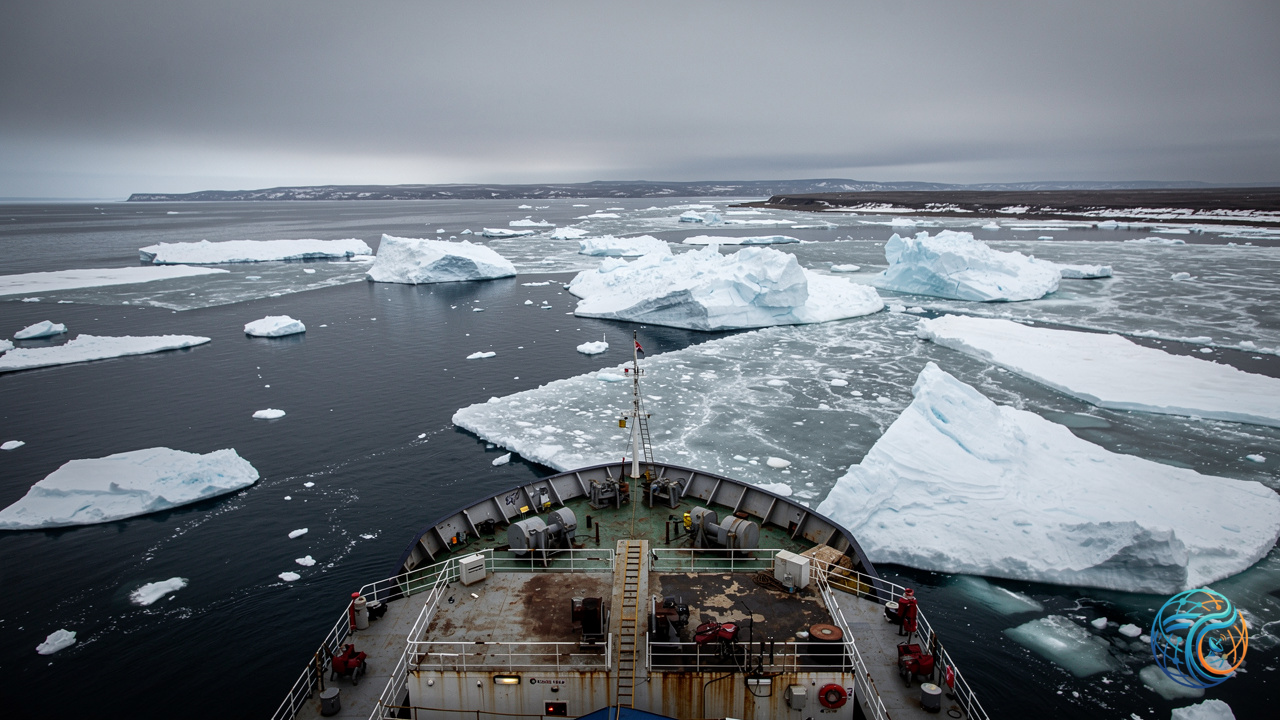
Recent evaluations released by the Manitoba premier’s office indicate that diminishing sea ice levels are fundamentally altering maritime logistics in northern regions, opening the door for year-round shipping operations across Hudson Bay. According to a spokesperson for Premier Wab Kinew, commercial navigation through these historically frozen Arctic-linked waters can now be sustained without relying on the most expensive classes of heavy icebreakers that traditionally dictate northern sea routes.
The Strategic Significance of the Port of Churchill
At the center of this logistical evolution is the Port of Churchill, uniquely positioned as Canada’s only rail-accessible deepwater port on Arctic waters. The facility has historically faced operational constraints and reduced commercial traffic, a trend accelerated following the dismantling of the Canadian Wheat Board. However, shifting environmental conditions and receding ice cover present a renewed logistical paradigm for northern trade routes.
- Geographic advantage: Canada’s only rail-accessible deepwater port on Arctic waters.
- Operational shift: Year-round shipping viability identified by Manitoba premier’s office.
- Vessel requirements: Navigation possible without utilizing the most expensive icebreakers.
- Historical context: Activity levels affected following the dismantling of the Canadian Wheat Board.
Environmental Realities and Maritime Logistics
The technical feasibility of extending shipping seasons relies heavily on observed reductions in multi-year and seasonal sea ice density. While commercial operators have traditionally contended with restricted transit windows lasting only a few months during warmer periods, updated assessments from regional authorities suggest that structural changes in ice patterns are creating prolonged windows of open water. This reduces transit overheads, minimizing the economic barrier previously imposed by specialized heavy-duty ice-breaking escort vessels.
As stakeholders examine the long-term viability of northern supply chains, these findings highlight an unprecedented transformation in sub-Arctic navigation. While infrastructure adjustments and market adaptations remain necessary to fully capitalize on year-round access, the official acknowledgment from the Manitoba premier’s office marks a critical milestone in the evolving operational scope of Hudson Bay trade corridors.
Source: Original Article