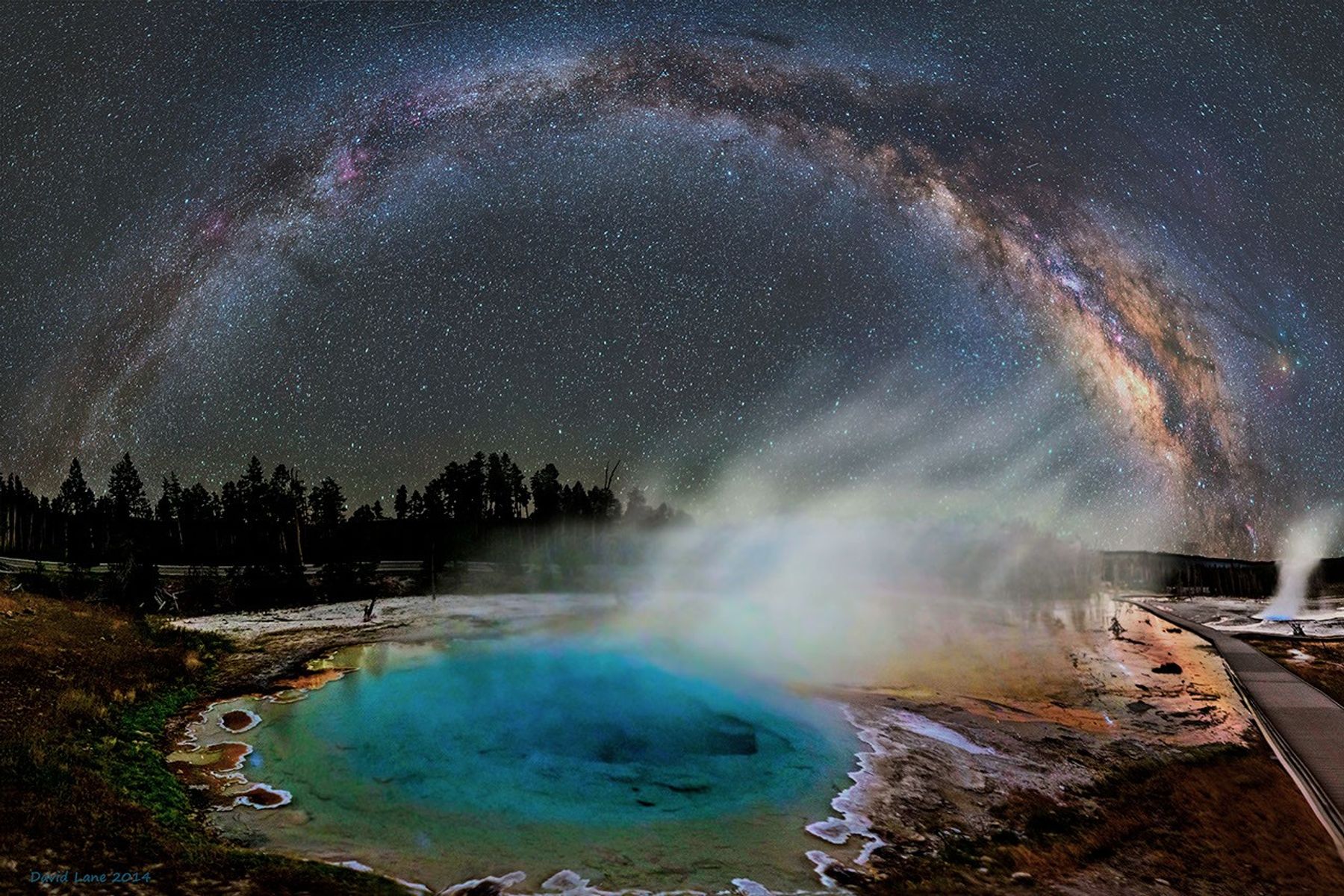
On August 16, 2026, a striking astronomical photograph captured the Milky Way galaxy arching above Yellowstone National Park. Published by NASA via its Astronomy Picture of the Day platform, the image highlights planetary geology and deep space observation.
This visual documentation highlights the fragility of dark skies. It emphasizes preserving natural nocturnal environments from artificial light pollution, which disrupts ecological balance and astronomical research.
Key Facts and Figures
- The featured image was published on August 16, 2026, on the APOD platform operated by NASA and Michigan Technological University.
- Yellowstone National Park spans Wyoming, Montana, and Idaho, offering high elevation and minimal urban light interference for astrophotography.
- The Milky Way core visible in the photograph contains hundreds of billions of stars, dust lanes, and Sagittarius A*.
- Astronomers and astrophotographers provide scientific context for each celestial photograph published on the APOD platform.
Context and Evolution
Astrophotography has evolved rapidly, transforming from a specialized hobby into a tool for public scientific engagement. Historically, capturing faint deep-sky objects required manual exposures with specialized film plates. Today, digital sensors capture celestial details invisible to the naked human eye.
Paired with landmarks like Yellowstone’s thermal basins, these images translate complex astrophysics into accessible visual data. This fusion bridges academic research and public curiosity.
Technological Integration in Astrophotography
Modern camera sensors use advanced back-illuminated CMOS technology to gather faint photons from deep space. These sensors capture the dynamic range between thermal features and distant galactic arms without blowing out highlights.
Furthermore, software stacking techniques eliminate thermal noise and atmospheric distortion. This produces razor-sharp, scientifically accurate representations of the cosmos.
Implications for Dark Sky Conservation
Natural darkness accelerates downward by about 10% annually, according to recent studies. Urban sprawl and poorly shielded commercial lighting threaten research facilities and stargazing sites.
Protecting remote sanctuaries like Yellowstone ensures future generations retain unobstructed cosmic views. National parks function as vital reserves where night skies are protected under federal conservation mandates.
Policymakers use data from astronomical images to draft local lighting ordinances. These municipal regulations mandate fully shielded outdoor fixtures in towns surrounding protected wilderness zones.
Economic and Tourism Impacts
Astro-tourism has emerged as an economic driver, generating revenue for rural communities bordering dark sky reserves. Travelers journey globally to witness galactic cores and meteor showers in clear atmospheres.
National parks report higher off-season visitor retention when promoting clear night sky visibility. Local economies benefit directly from hospitality investments tailored to evening eco-tours.
During these events, guides use high-powered lasers and Dobsonian telescopes to educate travelers on stellar lifecycles and nocturnal habitats.
Local business associations plan to expand dark sky marketing campaigns, anticipating a 15% increase in autumn eco-tourism bookings.
Stakeholder analysis reveals that local hospitality businesses and conservation groups benefit, while regional commercial developers face stricter compliance standards for outdoor lighting.
Unlike traditional daytime wildlife tourism, astro-tourism extends visitor stays into the evening, boosting local lodging and dining revenues.
Historically, conservation focused on terrestrial flora and fauna. Including the night sky marks a paradigm shift in environmental stewardship.
Expert Perspective on Cosmic Documentation
Astronomers emphasize that daily image features democratize space science. Dr. Robert Nemiroff and Dr. Jerry Bonnell curate images highlighting aesthetic beauty and scientific accuracy.
Their curation strategy ensures complex astronomical phenomena reach millions of viewers daily, inspiring new scientists and activists.
The stakes extend beyond aesthetic appreciation. Maintaining clear visual access to our galaxy fosters a commitment to planetary defense and stewardship.
Future Outlook and Emerging Challenges
As commercial satellite constellations expand in low Earth orbit, astrophotographers face challenges with light streaks contaminating deep-sky images. These artificial trails complicate professional surveys.
Future imaging campaigns will require advanced software algorithms to automatically detect and remove orbital satellite interference.
Concurrently, international conservation groups will lobby for stricter regulatory frameworks on commercial orbital launches. Protecting astronomy from orbital congestion remains a top priority.
Source: Original Article