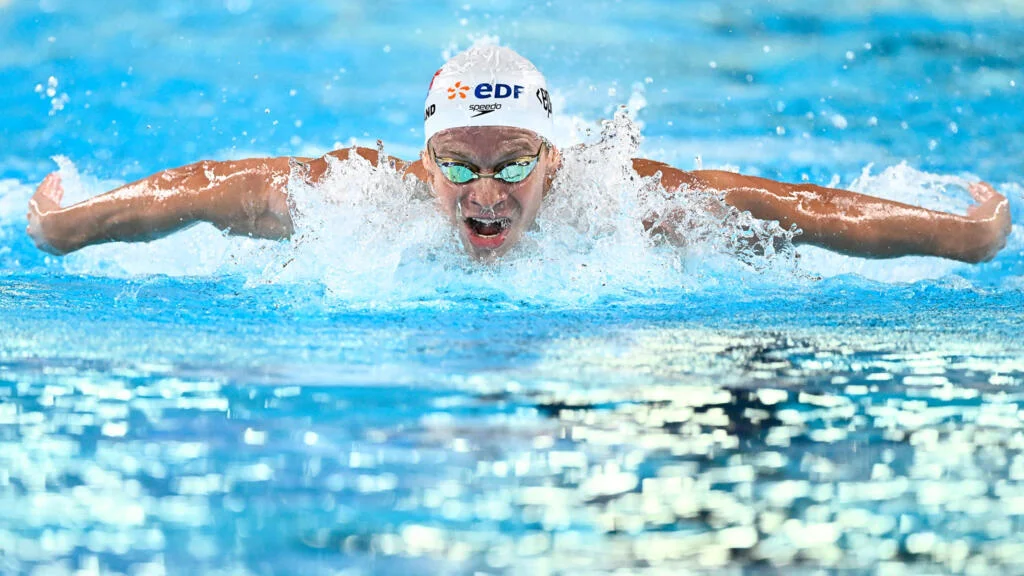
French swimming star Marchand claimed his first gold medal at the European championships on Saturday in Paris, dominating the 200-meter butterfly final. The victory reinforces his status as a dominant force in international competitive swimming.
Key Facts
- Marchand won the 200m butterfly final at the European swimming championships.
- The event took place in Paris on Saturday, August 15, 2026.
- This performance marks Marchand’s first career gold medal at the European championships.
- Marchand maintained a rigorous training schedule under elite coaching prior to the competition.
- The victory adds another major title to the athlete’s international medal collection.
Historical Context and Career Trajectory
Marchand’s rise to prominence began years prior to his triumph in Paris. Transitioning from a rising prodigy to an established veteran, he consistently adapts his stroke mechanics to stay ahead of international rivals. This European championship gold represents a vital milestone in his career.
Why This Matters
Athletic dominance in swimming relies on physiological endurance, hydrodynamics, and precise biomechanical execution. Marchand utilizes advanced stroke mechanics to minimize drag through the water. Sports analysts study these performances to understand how elite athletes optimize energy expenditure.
Securing a continental title in Paris validates Marchand’s transition between short-course and long-course competition formats. Regional championships serve as crucial testing grounds for athletes targeting global records and multi-sport international competitions.
The Biomechanics of Butterfly
The 200-meter butterfly is one of the most physically demanding events in swimming. Swimmers must sustain simultaneous overhead arm recovery and a dolphin kick. This movement requires exceptional core strength and precise synchronization.
Marchand excels in underwater phase efficiency, maximizing glide distance off walls during turns. Coaches measure underwater velocity using high-speed optical tracking systems embedded in modern aquatic facilities to refine pushoff angles.
Training Methodologies and Data Analytics
Modern swimming relies on wearable technology and real-time biometric feedback. Athletes use heart-rate monitors and lactate sensors to gauge exertion thresholds. Coaches analyze telemetry data to prevent overtraining and peak performance for target race dates.
Video analysis software allows technical staff to dissect every stroke cycle down to the millisecond. Adjustments to hand entry angles and breathing frequency yield critical fractions of a second in competitive finals.
Economic and Sponsorship Implications
High-profile victories in major European cities elevate the commercial valuation of elite swimmers. Global sports apparel brands and aquatic equipment manufacturers compete for endorsement rights. Increased media exposure drives revenue growth for national federations.
Athletes achieving success on home soil secure long-term sponsorship contracts that fund their training infrastructure. This financial stability allows competitors to hire specialized support staff, including nutritionists and physiotherapists.
Global Competition Landscape
International swimming features intense rivalry among federations from Europe, North America, and Asia. National programs benchmark performance metrics against global standards to secure funding. Continental victory signals strong readiness for world championships.
Sports scientists evaluate stroke efficiency metrics across different demographics to identify emerging talent pipelines. Data-driven programs help federations allocate resources to athletes with optimal profiles.
Stakeholder Analysis and Future Implications
The ripple effects of Marchand’s victory extend beyond individual glory. National swimming federations benefit from increased grassroots participation and government funding. Rival federations face mounting pressure to upgrade their training infrastructure.
Over the next 6 to 12 months, sports analysts expect an acceleration in the adoption of wearable biomechanical sensors. As federations prepare for the next Olympic cycle, Marchand’s performance sets the benchmark for technical excellence.
Future Outlook
Marchand will use this European victory as a baseline for upcoming international competitions. Training camps will focus on maintaining aerobic capacity while fine-tuning anaerobic thresholds. Analysts expect continued technological integration as federations seek marginal gains.
The convergence of biomechanical research, physiological monitoring, and athletic talent continues to push human speed in the water. Marchand remains at the forefront of this athletic evolution.
Source: Original Article