NVIDIA BioNeMo NIM microservices integrate with Claude Science to transform scientific research through agentic artificial intelligence. Modern AI systems can autonomously read complex academic literature, formulate hypotheses, invoke specialized models, and prioritize digital simulations or laboratory experiments. While coding agents initially proved valuable in software engineering, scientific inquiry requires continuous evaluation of empirical evidence and iterative hypothesis refinement.
Bridging AI Agents and Computational Biology
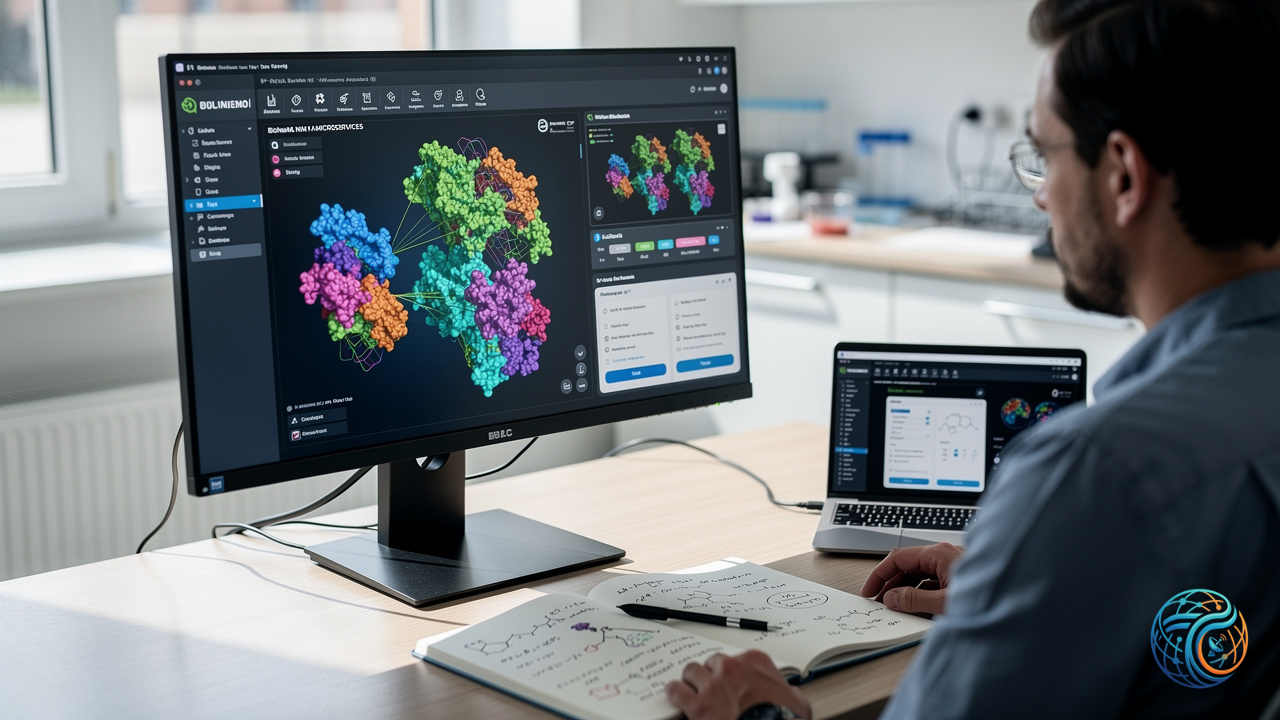
To bridge the gap between advanced reasoning agents and high-performance structural biology, the integration of specialized microservices is essential. NVIDIA BioNeMo NIM microservices provide a streamlined, production-ready framework for deploying advanced computational models, including those dedicated to protein structure prediction. By bringing these high-throughput microservices into scientific environments like Claude Science, researchers empower AI agents to directly interact with complex biochemical data, moving beyond literature review into active computational discovery.
Key Capabilities of Agentic Scientific Workflows
The convergence of NVIDIA BioNeMo NIM microservices and advanced scientific assistants introduces several distinct technical advantages for computational biology laboratories:
- Autonomous Hypotheses Testing: AI agents can propose molecular mechanisms and instantly test them by calling protein structure prediction models.
- Streamlined Model Deployment: NIM microservices offer optimized, standardized APIs that simplify the integration of heavy biological AI models into agentic workflows.
- Iterative Research Loops: Agents can continuously evaluate structural prediction outputs, adjusting parameters and prioritizing subsequent computational runs without manual intervention.
- Enhanced Literature Synthesis: Combining reading comprehension with direct model execution allows agents to validate published claims against freshly generated structural data.
As agentic frameworks mature, coupling large language models with domain-specific microservices like BioNeMo will accelerate drug discovery and molecular engineering. By removing technical friction between reasoning engines and specialized bioinformatics tools, researchers can focus on high-level experimental design while AI agents handle rigorous computational execution.
Source: Original Article