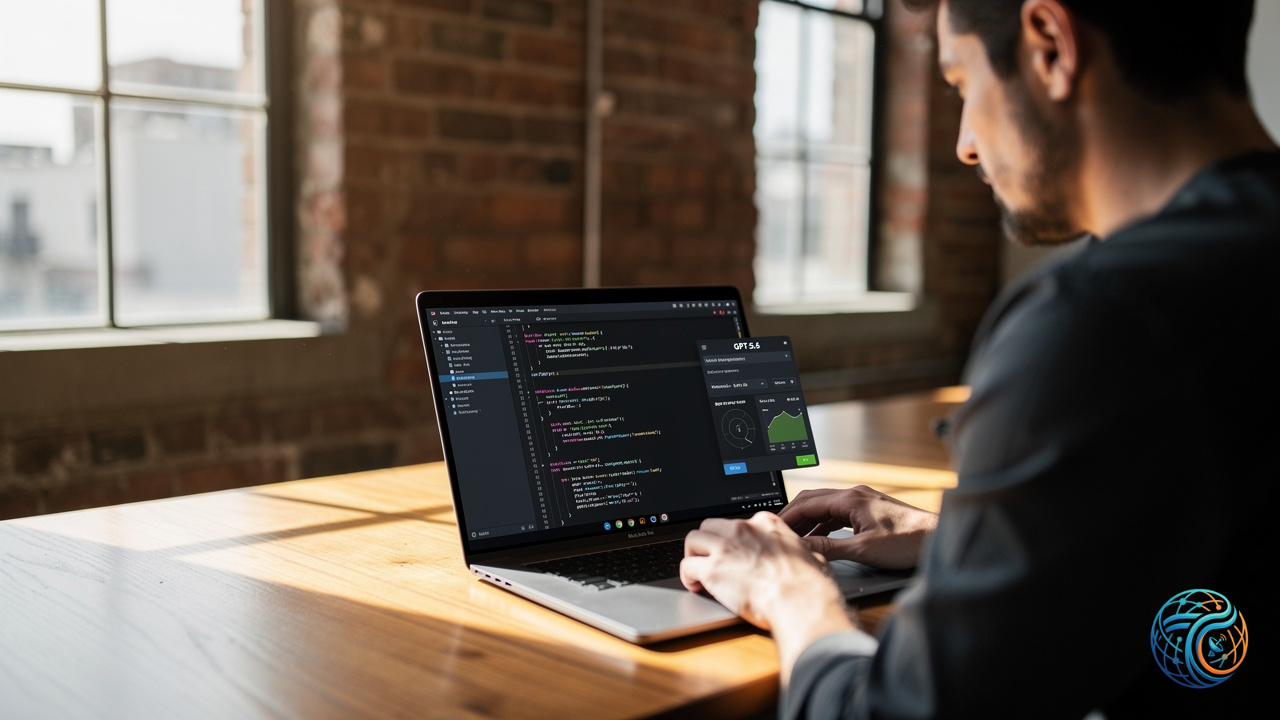
Software engineering workflows are experiencing a significant shift as OpenAI brings GPT-5.6 directly into the Kiro platform. This integration is designed to optimize how developers handle the entire software lifecycle, ranging from initial system planning and code construction to rigorous review and automated testing. By introducing this advanced model to Kiro, the platform aims to deliver a superior balance of computational efficiency and economic value, otherwise known as price-performance, for engineering teams operating at scale.
Enhancing the Software Development Lifecycle
Modern application development demands rapid iteration cycles without sacrificing code quality or structural integrity. The deployment of GPT-5.6 within Kiro targets these exact bottlenecks by offering deep contextual comprehension across multiple stages of engineering. Whether teams are architecting new microservices or refactoring legacy codebases, the model assists practitioners through continuous feedback loops.
- Planning: Assisting teams in breaking down complex feature requirements into manageable architectural tasks.
- Building: Generating syntactically accurate code snippets and scaffolding across diverse programming languages.
- Review: Scanning pull requests for potential logical flaws, performance bottlenecks, and security vulnerabilities.
- Testing: Automating the creation of unit tests and edge-case scenarios to validate application robustness.
Optimizing Price-Performance for Engineering Teams
Cost management remains a primary concern for organizations scaling their artificial intelligence infrastructure. The integration of GPT-5.6 in Kiro addresses this challenge by maximizing computational output relative to the resource expenditure required. This optimization allows engineering organizations to deploy advanced automated assistance more broadly across their teams, supporting heavier workloads without incurring unsustainable API overhead.
As development environments continue to adopt automated workflows, updates like the inclusion of GPT-5.6 in Kiro establish new benchmarks for how efficiently large language models can support complex programming tasks. Developers can now leverage these capabilities to streamline their daily routines, ensuring that software deployment remains fast, reliable, and cost-effective.
Source: Original Article