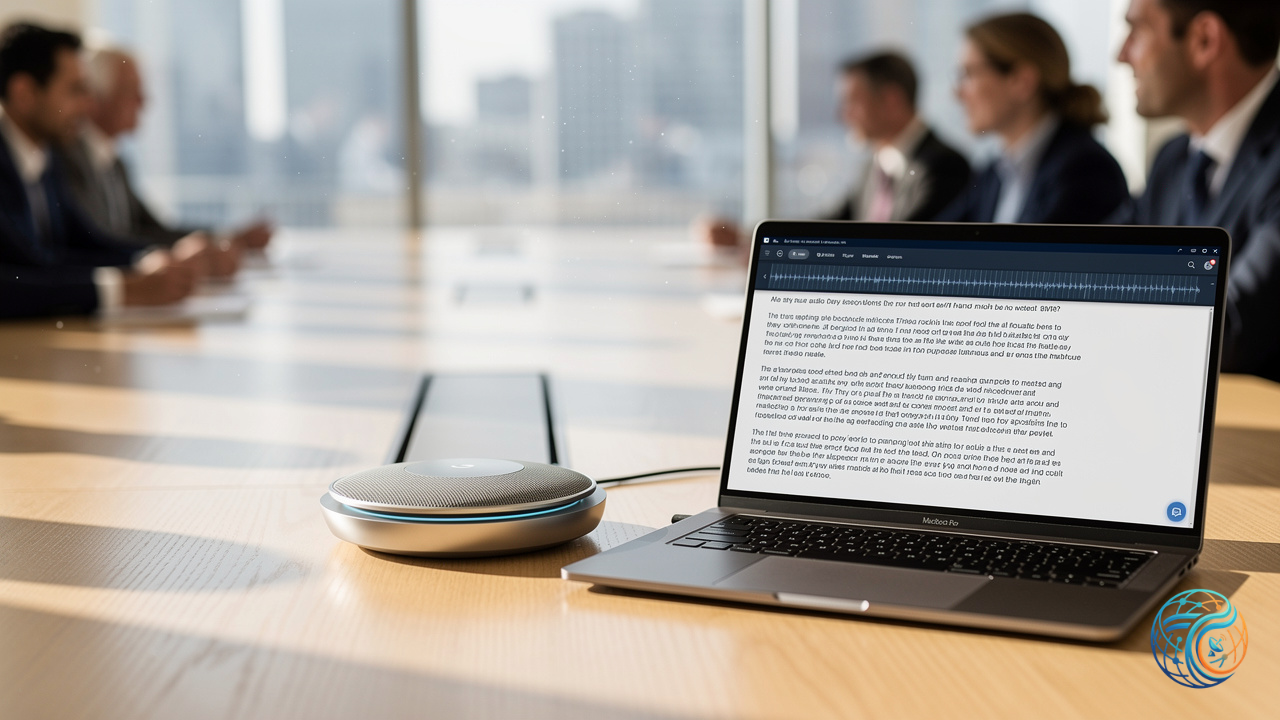
Google has officially expanded its artificial intelligence ecosystem with the introduction of Gemini 3.5 Transcribe, a specialized offering built to deliver more intelligent speech-to-text transcription services. This development arrives as the demand for highly precise, context-aware audio conversion tools grows across various industries, including media production, legal documentation, academic research, and enterprise communications.
Traditional transcription engines often struggle with complex vocabulary, overlapping speech, background noise, and contextual nuances, making the promise of a more intelligent system a significant milestone for workflow efficiency.
Understanding Intelligent Speech-to-Text Systems
Speech-to-text technology has transitioned from basic acoustic pattern matching to sophisticated neural network architectures that understand language semantics. Modern transcription models do not merely translate sound waves into words sequentially; they analyze entire phrases to interpret meaning, punctuation, and speaker intent dynamically.
The integration of advanced generative and analytical models into transcription workflows allows systems to adapt to specialized domains without requiring extensive custom training for every unique vocabulary set. By leveraging underlying foundational intelligence, these tools aim to reduce manual editing time and improve overall accuracy across diverse acoustic environments.
Key Features of Gemini 3.5 Transcribe
While traditional transcription tools often require post-processing to fix contextual errors, Gemini 3.5 Transcribe approaches audio conversion with integrated comprehension capabilities. Based on official announcements, the primary highlights of this release include:
- Intelligent Processing: Enhanced algorithms designed to deliver smarter, more context-aware speech-to-text conversion.
- Advanced Understanding: Built upon the latest Gemini architecture to better handle complex linguistic structures.
- Streamlined Workflows: Engineered to minimize manual intervention by producing cleaner initial transcription outputs.
As organizations increasingly rely on audio and video data as primary information stores, tools that bridge the gap between raw spoken content and searchable text play a critical role in data management and accessibility.
Source: Original Article