
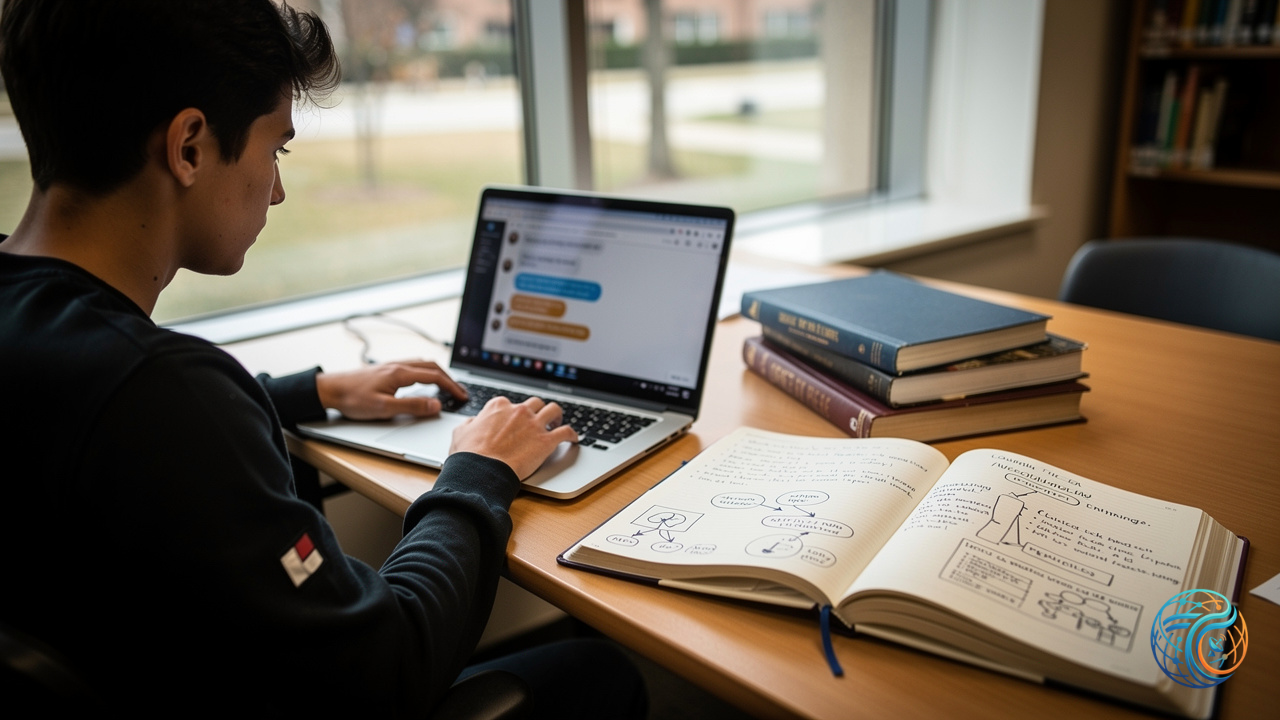
As artificial intelligence tools become deeply embedded in academic environments, a recent randomized study involving more than 1,000 university students provides empirical insight into how generative systems like ChatGPT influence student performance, originality, and analytical depth when paired with dedicated critical-thinking training.
The Impact of AI on Real-World University Assignments
The large-scale study was designed to measure the practical outcomes when higher-education learners utilize conversational AI models for complex academic tasks. Rather than relying on speculative assessments, the researchers evaluated performance on a tangible, real-world university assignment to see how access to advanced language models shifts student output.
Integrating large language models into coursework has sparked ongoing debates across academic institutions regarding academic integrity, cognitive offloading, and the dilution of foundational skills. However, this study shifts the focus toward how structured methodology and deliberate pedagogical frameworks can alter the trajectory of student engagement with machine-generated assistance.
Key Findings from the Student Study
- Scale: Evaluated more than 1,000 university students.
- Methodology: A randomized study framework assessing real-world university assignment performance.
- Core Metrics: Examined the interplay between ChatGPT usage, critical-thinking skill acquisition, and the resulting originality of student submissions.
- Performance Outcomes: Explores the tangible academic gains realized when students receive explicit critical-thinking guidance alongside AI tool access.
Fostering Broader Thinking Alongside Automation
A central challenge in modern educational technology is preventing students from passively accepting AI-generated outputs without evaluation. The findings emphasize that when students undergo targeted critical-thinking training, their interaction with tools like ChatGPT changes fundamentally. Instead of settling for superficial or automated answers, learners are equipped to question premises, synthesize multiple perspectives, and drive higher levels of originality in their final work.
This research underscores the evolving role of educators in the digital age. As artificial intelligence continues to reshape how information is accessed and processed, academic success increasingly relies on cultivating rigorous analytical skills to complement computational capabilities.
Source: Original Article