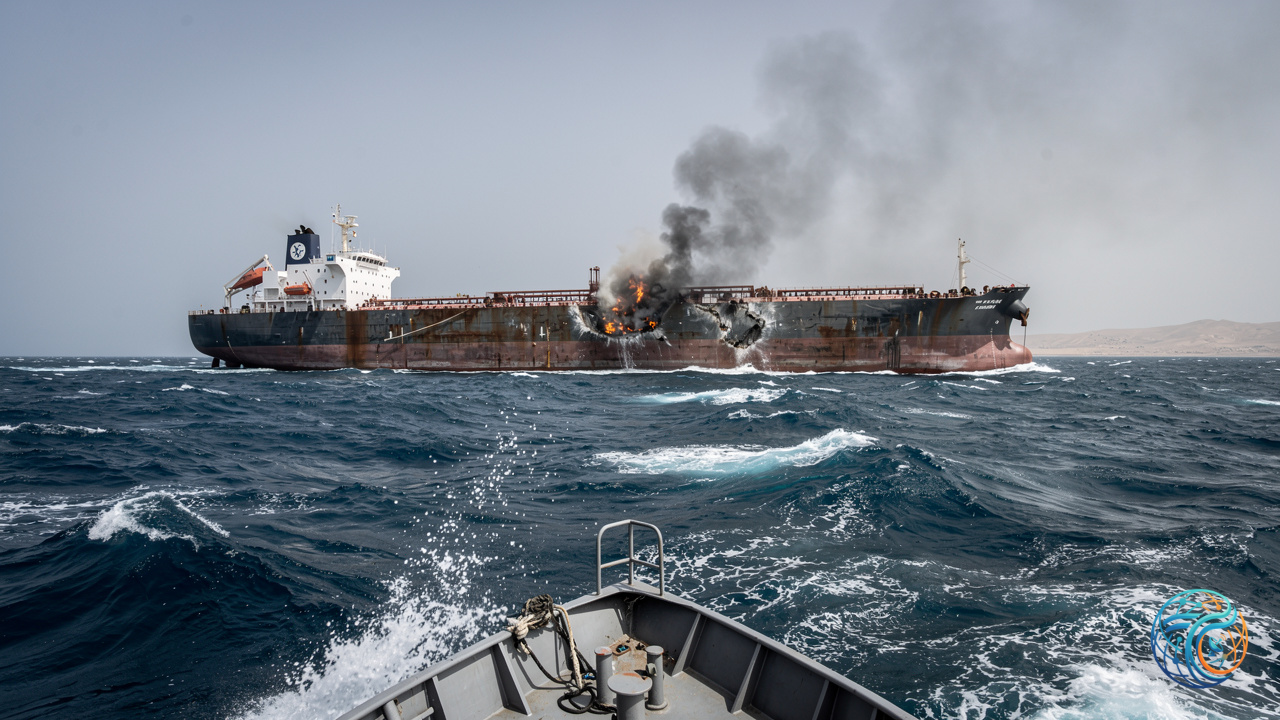
Early Tuesday, an oil tanker sustained damage after being struck by an unidentified projectile while transiting the Strait of Hormuz off the coast of Oman. According to an advisory issued by the United Kingdom Maritime Trade Operations (UKMTO), the strike resulted in material damage to the vessel, though no casualties were reported among the crew members onboard. This incident marks the latest escalation in a critical maritime chokepoint that has faced severe operational disruptions and security challenges.
The Strategic Importance and Blockade of the Strait of Hormuz
The Strait of Hormuz serves as one of the world’s most vital energy corridors, connecting the Persian Gulf with the Gulf of Oman and the Arabian Sea. A massive percentage of global petroleum passes through this narrow passage, making it a pivotal geopolitical and economic nexus. However, normal maritime traffic has been drastically altered following military escalations in the region.
Reports indicate that Tehran has maintained an effective blockade of the strait. This enforcement follows military strikes conducted by the United States and Israel against Iran in late February. Since then, the strategic corridor has become heavily militarized and regulated by regional authorities seeking to exert control over commercial shipping lanes.
Enforced Tolls and Targeting Circumvention Tactics
As part of its ongoing enforcement of the strait, authorities in Tehran have signaled a desire to impose mandatory financial tolls for commercial vessels seeking passage through the corridor. Ships attempting to bypass preferred routes or avoid designated checkpoints have faced aggressive countermeasures.
- Incident Location: Strait of Hormuz, off the coast of Oman.
- Target: An active commercial oil tanker.
- Impact: Structural and material vessel damage reported.
- Casualties: Zero injuries or fatalities recorded among the crew.
- Reporting Agency: United Kingdom Maritime Trade Operations (UKMTO).
- Underlying Context: Effective blockade established following US and Israeli strikes on Iran in late February.
- Enforcement Measures: Implementation of mandatory passage tolls and targeted strikes against vessels accused of route circumvention.
Maritime security analysts and international logistics firms continue to monitor the situation closely as commercial vessels navigate the high-risk corridor. The ongoing tensions underscore the vulnerability of global supply chains to localized geopolitical conflicts, prompting calls for heightened vigilance and defensive routing across the region.
Source: Original Article