
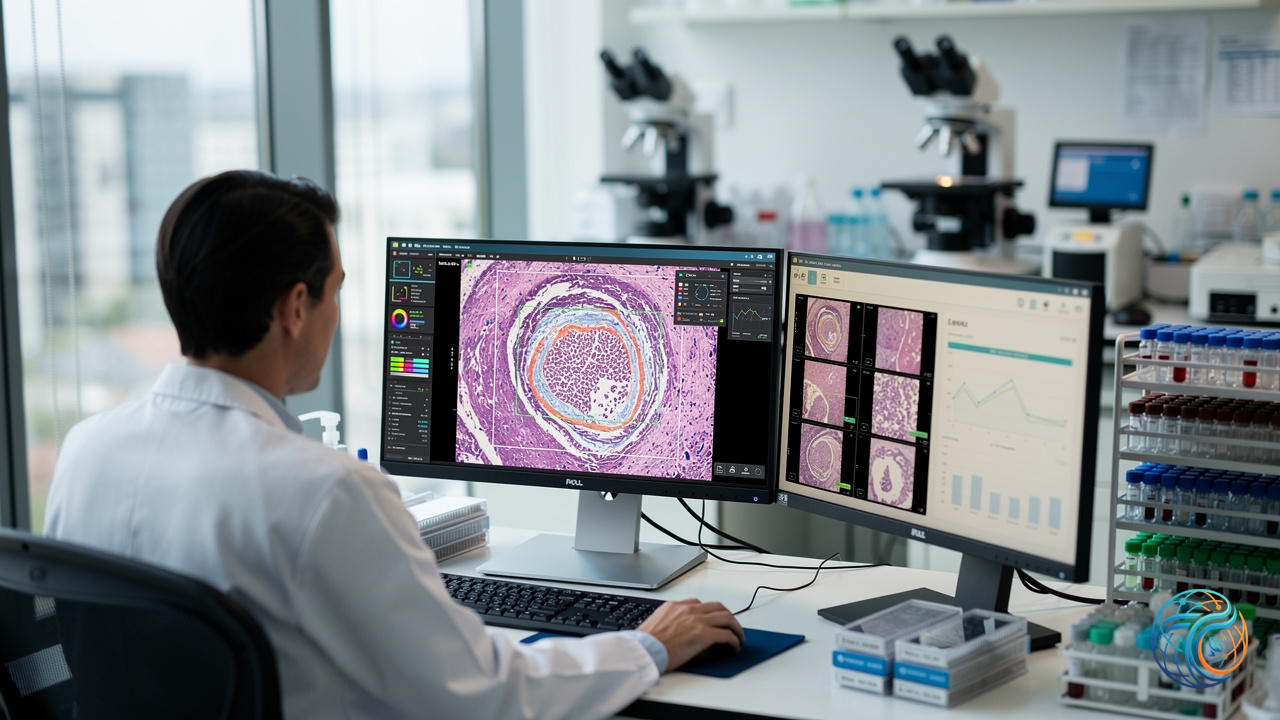
Microsoft Research has introduced GigaPath-Flash and GigaTIME-Flash, two advanced pathology foundation models engineered to dramatically reduce computational resource requirements while preserving high-level performance metrics. In modern computational biology, deep learning models analyzing whole-slide tissue images have historically demanded immense processing power and memory. By lowering these heavy computational barriers, the newly unveiled flash variants pave the way for expansive, population-scale medical studies and much broader exploratory research across digital pathology.
Overcoming Computational Bottlenecks in Digital Pathology
Pathology foundation models serve as the underlying intelligence for automated tissue analysis, helping researchers spot subtle disease markers, understand microenvironments, and predict clinical outcomes. However, the sheer size of high-resolution digital pathology slides—often gigabytes per single sample—makes training and deploying these architectures resource-intensive. GigaPath-Flash and GigaTIME-Flash directly target this infrastructure bottleneck, demonstrating that advanced machine learning frameworks can achieve robust analytical capabilities with significantly less computational overhead.
Key Architectural Advantages
- Reduced Computational Demands: Both models cut down processing resource requirements compared to traditional, heavier architectures.
- Maintained Performance: Strong predictive and analytical performance is preserved despite the efficiency gains.
- Population-Scale Potential: The optimized efficiency opens up avenues for massive-scale epidemiological and clinical exploration.
- Broad Exploration: Researchers can scale up cohort sizes without scaling hardware budgets proportionally.
Enabling Population-Scale Discovery
By streamlining the computational pipeline, GigaPath-Flash and GigaTIME-Flash allow research institutions and healthcare organizations to scale their data processing pipelines efficiently. Analyzing thousands or hundreds of thousands of whole-slide images requires models that can execute inferences swiftly and cost-effectively. These efficient iterations eliminate major operational friction points, shifting the boundaries of what large-scale computational pathology initiatives can achieve in research environments.
Source: Original Article