
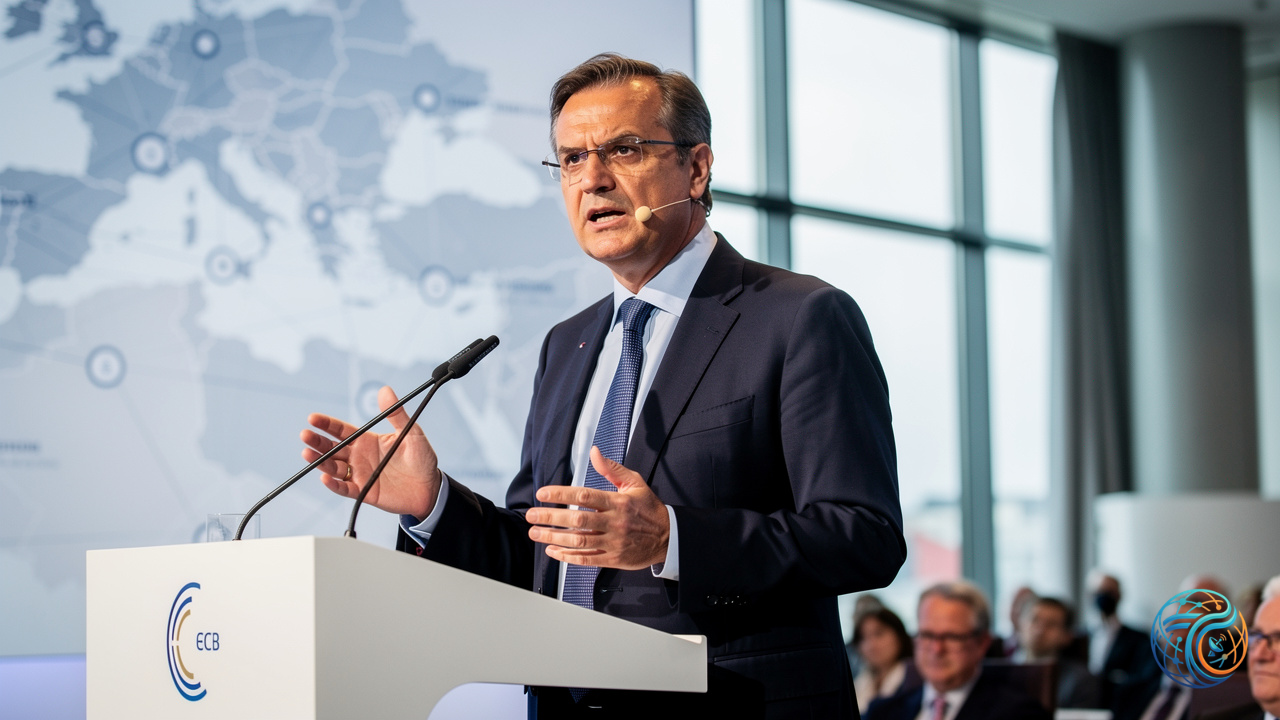
As the landscape of global finance undergoes a profound digital evolution, European monetary and financial authorities are shifting their strategic focus from conceptual planning to practical implementation. Piero Cipollone, speaking on August 26, 2026, outlined the critical transition currently underway within the European financial ecosystem, emphasizing the movement from initial vision to tangible delivery in building a robust, tokenised financial market infrastructure.
The Strategic Shift to Tokenisation
The financial sector stands at a monumental crossroads where traditional settlement mechanisms meet distributed ledger technologies (DLT). For several years, discussions surrounding tokenised assets, smart contracts, and blockchain integration remained largely theoretical. However, the current operational phase demands concrete solutions that can seamlessly integrate with existing institutional frameworks while unlocking the efficiency gains promised by tokenisation. Cipollone’s insights highlight that Europe is actively bridging the gap between high-level policy frameworks and real-world deployment.
Integrating tokenised financial instruments into mainstream European markets requires meticulous coordination among central banks, commercial financial institutions, and technology providers. The primary objective is to eliminate settlement friction, reduce counterparty risks, and enhance liquidity across cross-border transactions. By leveraging distributed ledger technology, the financial market can achieve instantaneous atomic settlement, fundamentally transforming how assets change hands.
Key Pillars of Europe’s Digital Market Infrastructure
Developing a secure and scalable tokenised financial ecosystem involves addressing several critical components to ensure regulatory compliance, technical interoperability, and market-wide adoption. The roadmap focuses on several core initiatives:
- Interoperability: Ensuring that novel DLT platforms can communicate effectively with legacy central bank and commercial settlement systems.
- Regulatory Compliance: Aligning tokenised asset issuance and trading with stringent European financial regulations and anti-money laundering standards.
- Scalability: Deploying infrastructure capable of handling high transaction volumes without compromising security or speed.
- Wholesale Integration: Providing secure central bank money settlement solutions for tokenised wholesale transactions.
These elements form the backbone of the European strategy, ensuring that innovation does not outpace stability. As tokenised financial markets mature, market participants must adapt their technological stacks to support these new paradigms.
Looking Ahead at Implementation Challenges
While the vision for a tokenised European market is clear, executing this transformation involves navigating complex technical and operational hurdles. Financial institutions are tasked with modernizing legacy architectures that have operated for decades. Furthermore, fostering widespread adoption requires building trust among market participants who must transition from familiar, albeit slower, settlement processes to automated, programmable financial networks.
The ongoing efforts detailed by Piero Cipollone signal a decisive commitment by European authorities to lead the next generation of financial market infrastructure. By focusing on practical delivery, Europe aims to secure its competitive edge in the global digital economy, ensuring that tokenisation benefits both wholesale markets and the broader economic landscape.
Source: Original Article