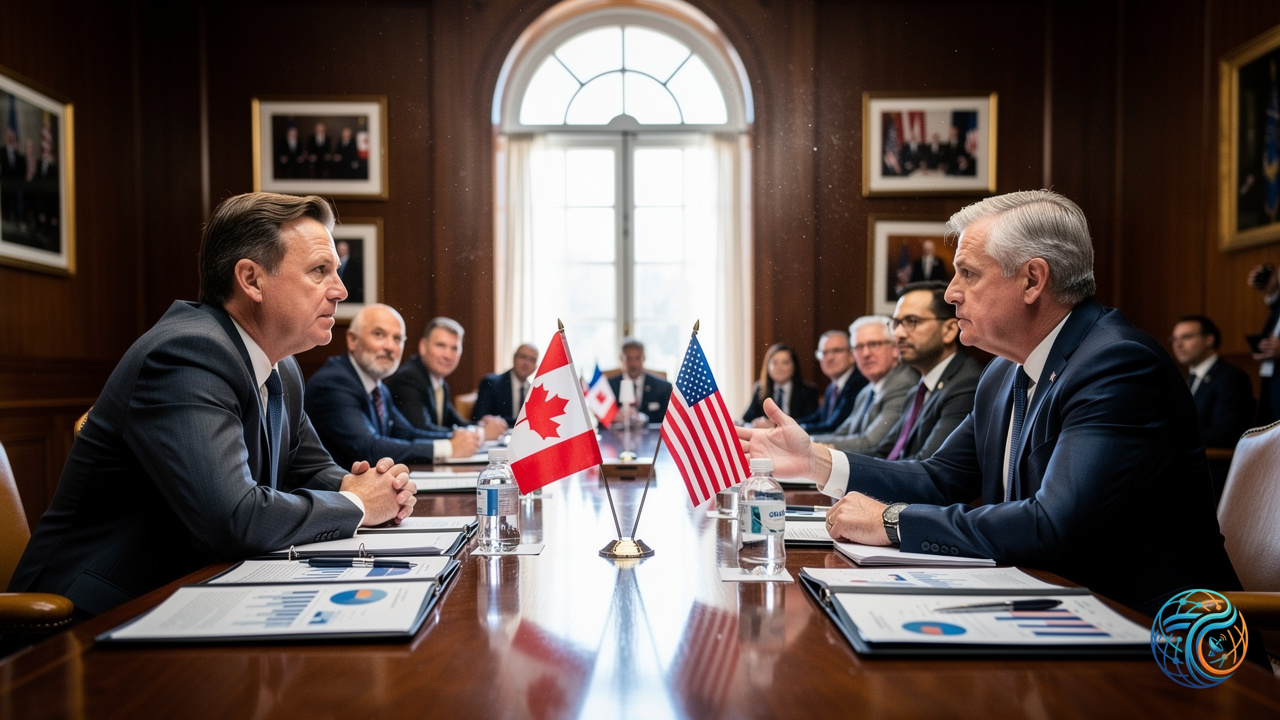
As political figures from Canada and the United States exchange sharp personal insults across the border, Canada-U.S. trade negotiators from both nations have noticeably steered clear of personal attacks in public forums. Experts tracking the escalating trade dispute note that this stark contrast in tone stems directly from the distinct functional roles that trade leads and elected politicians must maintain as economic tensions rise.
The Divergence Between Politics and Diplomacy
The boundary between aggressive political rhetoric and calculated diplomatic engagement became sharply visible following recent developments in bilateral relations. While high-profile political figures engaged in heated exchanges, designated trade representatives adopted a much more measured approach.
International trade policy analysts emphasize that negotiators operate under a different set of strategic imperatives. Their primary objective is to preserve functional channels of communication to manage tariffs, supply chains, and regulatory frameworks, regardless of the political posturing occurring in public arenas.
Key Dynamics of the Canada-U.S. Trade Dispute
- Negotiation Strategy: Trade leads deliberately avoid personalization to prevent diplomatic deadlocks.
- Political Rhetoric: Elected officials utilize vocal public stances to address domestic political constituencies.
- Tariff Timelines: Tensions intensified following decisions by the Trump administration to temporarily delay tariffs on Canada.
- Key Figures: High-level coordination involves Canadian Trade Minister Dominic LeBlanc and U.S. Trade Representative Jamieson Greer.
Publicly available imagery from August 19, 2026, captured Canadian Trade Minister Dominic LeBlanc and U.S. Trade Representative Jamieson Greer standing outside Greer’s office. That meeting occurred just one day after the Trump administration implemented a temporary delay on tariffs targeting Canadian goods, underscoring the ongoing, pragmatic engagement happening behind the scenes despite the broader political friction.
Understanding the Negotiator’s Role
Experts analyzing the structural mechanics of international trade disputes point out that public insults can irreversibly damage the trust required to secure complex economic compromises. By keeping interactions professional, negotiators like LeBlanc and Greer insulate technical discussions from external political volatility.
While the rhetorical clashes between other politicians capture media headlines, the disciplined posture of the core negotiating teams remains essential for navigating active trade disagreements and achieving stable policy outcomes.
Source: Original Article