
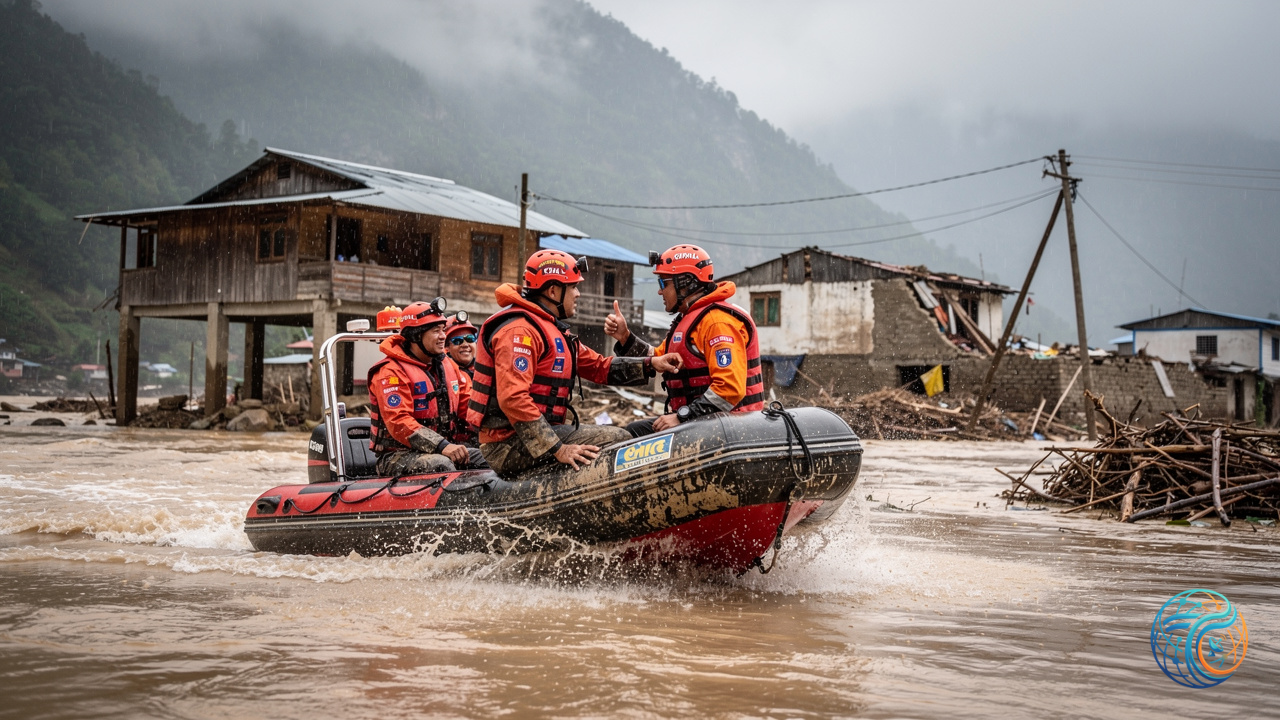
Nepal and China resume flood rescue operations following a brief pause, as authorities grapple with a devastating crisis that has driven the regional death toll close to 600. Emergency response teams are re-entering affected zones to locate survivors and provide vital assistance, even as environmental and geographical experts issue urgent warnings regarding severe secondary hazards developing across the landscape.
Resumption of Emergency Operations
Following a temporary halt that complicated logistics and delayed deployment, joint and coordinated efforts between Nepal and China have kicked back into gear. Search and rescue personnel are navigating heavily impacted terrain to reach isolated populations, recover victims, and assess structural damage caused by the overwhelming waters. The rising fatalities, now nearing the 600 mark, underscore the unprecedented scale of the catastrophe and the immense pressure facing regional emergency frameworks.
- Operations Status: Rescue efforts have resumed after a brief pause.
- Casualties: The regional death toll is currently nearing 600.
- Cross-Border Coordination: Operations involve collaborative response measures between Nepal and China.
Emerging Geographical Threats
Beyond the immediate destruction left in the wake of the deluge, scientific and geological experts are closely monitoring a newly formed lake in the region. The sudden creation of this body of water poses a severe secondary danger to downstream communities and infrastructure. Geologists caution that the structural integrity of the natural dam holding the newly formed lake remains highly unstable, raising fears of catastrophic flash flooding if the barrier fails under ongoing environmental pressures.
- Primary Hazard: A newly formed lake threatening downstream areas.
- Expert Warnings: Specialists caution of imminent danger from potential dam instability and secondary floods.
Source: Original Article