
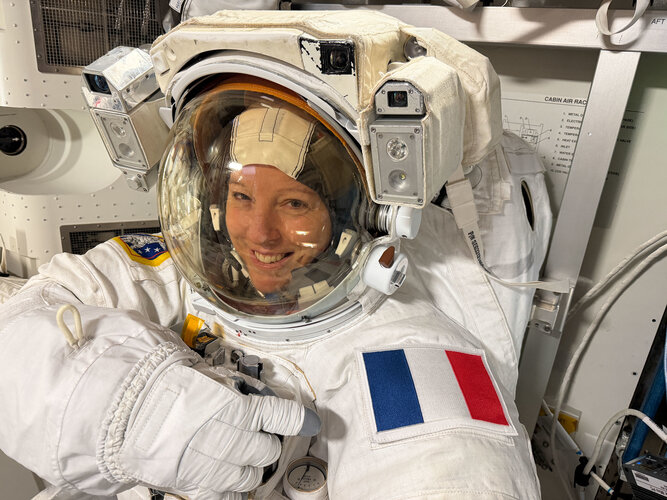
European Space Agency astronaut Sophie Adenot will venture outside the International Space Station into the vacuum of space for her inaugural extravehicular activity on Tuesday, August 18, 2026. This milestone reinforces Europe’s expanding footprint in human spaceflight.
Key Mission Parameters
Orbital missions require precise planning to guarantee astronaut safety. The deployment tests modern life support systems in extreme environments.
- Date of Execution: Tuesday, August 18, 2026.
- Space Agency: European Space Agency.
- Astronaut: Sophie Adenot, completing her debut extravehicular activity.
- Location: The exterior environment of the International Space Station.
The Engineering Behind Extravehicular Activity
Performing tasks in low Earth orbit demands advanced life support systems. An extravehicular activity exposes astronauts to extreme thermal fluctuations and orbital debris. Spacesuits function as self-contained spacecraft that maintain internal pressure, regulate temperature, and supply oxygen. Adenot spent months in neutral buoyancy pools to master the mechanics of moving in a pressurized suit. This precision engineering underpins modern human spaceflight.
Advancing European Orbital Capabilities
Adenot’s deployment represents a strategic advancement for the European Space Agency in long-term orbital habitation. Spacewalks are essential for upgrading solar arrays, installing scientific instruments, and repairing structural components. Expanding the roster of active spacewalkers ensures operational autonomy in low Earth orbit and supports future deep space exploration.
The Economic and Scientific Stakes
Human spaceflight drives investments in advanced materials, robotics, and telecommunications. Commercial aerospace contractors supply specialized components, creating a feedback loop between orbital testing and terrestrial manufacturing. Data gathered during this mission informs next-generation life support hardware for lunar surface expeditions.
Historical Context and Evolution of Spacewalks
Extravehicular activities have evolved dramatically since the Gemini and Apollo programs. Modern spacewalks require extensive teamwork between flight controllers and crew members. Adenot’s mission builds on decades of aerospace knowledge, making routine orbital maintenance safer than ever before.
Stakeholder Analysis and Industrial Impact
Missions like Adenot’s impact a vast network of space agencies and private manufacturers. Public agencies secure investments in science, while commercial contractors validate proprietary hardware under cosmic conditions. Exhaustive pre-flight training mitigates significant financial and reputational risks.
Future Implications for Deep Space Exploration
Insights from this extravehicular activity will influence training for the next generation of European astronauts. As humanity prepares for sustained lunar habitation and crewed missions to Mars, proficiency in extravehicular maintenance serves as a foundational baseline for planetary operations.
Comparative Analysis of International Crews
European participation in extravehicular activities has steadily accelerated over the past two decades. International crew members share the burden of station maintenance and foster orbital diplomacy. Adenot’s historic walk places her among an elite group of global aviators.
Why This Matters
Spacewalks reveal the resilience of human presence in orbital environments. Every successful deployment extends the lifespan of critical scientific infrastructure. As agencies pivot toward commercialized low Earth orbit, routine extravehicular proficiency becomes non-negotiable for interplanetary ambitions.
What Happens Next
Following the August 18 deployment, engineering teams will analyze telemetry data and hardware performance. Post-mission debriefings will refine protocols for upcoming station maintenance. Adenot will resume her onboard scientific schedule in microgravity.
Source: Original Article