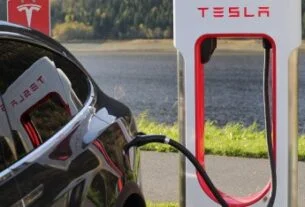

Commercial Robotaxis for public hire officially transitioned from experimental trials into active urban deployment in August 2026. Major technology developers deployed fleets of driverless cabs across designated metropolitan districts in North America and parts of Asia. This commercial milestone marks the official beginning of autonomous passenger transport for general consumers.
Hard Facts on Autonomous Deployment
Urban deployment metrics highlight the current operational scale of commercial driverless transportation networks.
- Commercial robotaxis operate exclusively within pre-mapped geofenced zones in specific metropolitan areas.
- Fleet operators maintain remote assistance centers to manually guide vehicles through unexpected road obstructions.
- Vehicle sensor suites combine LiDAR (light detection and ranging), radar, and high-resolution cameras for 360-degree environmental awareness.
- Passenger onboarding occurs exclusively through dedicated mobile applications without human drivers present.
- Regulatory approval requires exhaustive safety validation and millions of testing miles before public passenger authorization.
The Geographic Reality of Rollout
Commercial availability remains restricted to specific urban environments rather than offering nationwide coverage. Municipalities with favorable regulatory frameworks and predictable weather patterns secured early deployment status. Dense metropolitan centers present complex driving environments that test the limits of current perception algorithms. Software systems must process thousands of unpredictable pedestrian actions every minute in these dense urban cores.
Suburban and rural deployment lags behind urban rollouts due to infrastructure deficits and sparse road data. Mapping companies prioritize high-density commercial routes to maximize return on capital expenditure. Consequently, residents outside major metropolitan hubs cannot access automated ride-hailing services. This geographic disparity creates a dual-tier mobility landscape where only select city dwellers benefit from autonomous transit.
Economic Pressures on Traditional Transport
The introduction of commercial robotaxis disrupts traditional urban transportation business models and labor markets. Fleet operators eliminate labor costs associated with human drivers, which historically constituted the largest operating expense for ride-hailing companies. Lower operational costs enable competitive pricing against legacy taxi and rideshare services. Traditional drivers face mounting economic pressure as autonomous fleets scale operations and capture market share.
Municipalities also evaluate the long-term fiscal impacts of automated fleets on public mass transit ridership. Lower ticket revenues for buses and subways could force transit authorities to reduce service frequencies. Urban planners must redesign curbside management to accommodate dedicated passenger drop-off zones for automated vehicles. Failure to adapt urban infrastructure risks severe traffic congestion as empty vehicles circulate between fares.
Safety Validation and Public Trust
Safety statistics from autonomous fleet operators indicate lower collision rates per mile compared to human-driven vehicles. Computers do not experience fatigue, distraction, or emotional impairment behind the wheel. However, edge cases involving erratic human behavior or extreme weather continue to challenge autonomous driving systems. When unexpected obstacles arise, vehicles often come to a complete stop, occasionally causing localized traffic blockages.
Building sustained public trust requires transparent reporting of all disengagements and safety incidents. Regulatory bodies mandate rigorous data sharing to monitor system reliability across diverse driving conditions. Consumer acceptance varies widely depending on demographic age groups and previous exposure to advanced technology. Younger demographics readily adopt driverless transport, while older populations express apprehension regarding vehicle accountability.
Why This Matters
The successful commercialization of robotaxis represents a fundamental shift in how societies conceptualize personal vehicle ownership and urban mobility. This technology reduces the necessity for private car ownership in dense cities, freeing valuable real estate currently dedicated to parking structures. Furthermore, widespread adoption of electric autonomous fleets directly supports municipal carbon reduction targets. Understanding this transition helps policymakers anticipate labor disruptions and infrastructure demands over the next decade.
The Economic Stakes
Technology conglomerates and automotive manufacturers have invested billions of dollars into autonomous driving research and development. The financial stakes involve capturing a dominant position in the multi-trillion-dollar global transportation-as-a-service market. Traditional automakers risk becoming hardware suppliers if software developers control the customer interface and fleet management systems. Conversely, software firms rely on automotive manufacturing partnerships to produce durable, sensor-equipped vehicles at scale.
Insurance industries also undergo structural transformation as liability shifts from individual drivers to software developers and fleet operators. Commercial vehicle insurance policies now require complex risk assessment models based on software safety records rather than human driver history. This shift redefines liability frameworks across the entire automotive and legal landscape.
Future Outlook
Scale remains the primary objective for autonomous vehicle developers over the coming years. Expanding operational boundaries beyond initial geofenced zones requires continuous improvement in artificial intelligence generalization. Engineers focus on developing foundational models that interpret novel driving scenarios without prior mapping data. As software intelligence matures, autonomous fleets will gradually integrate into smaller cities and suburban corridors.
Policy harmonization across international jurisdictions will dictate the global speed of deployment. Regulatory fragmentation forces companies to adapt software parameters for every individual municipality or state. Streamlining these standards remains essential for achieving widespread commercial viability on a global scale. The arrival of robotaxis in select cities today signals the irreversible beginning of a driverless transportation era.
Source: Original Article