
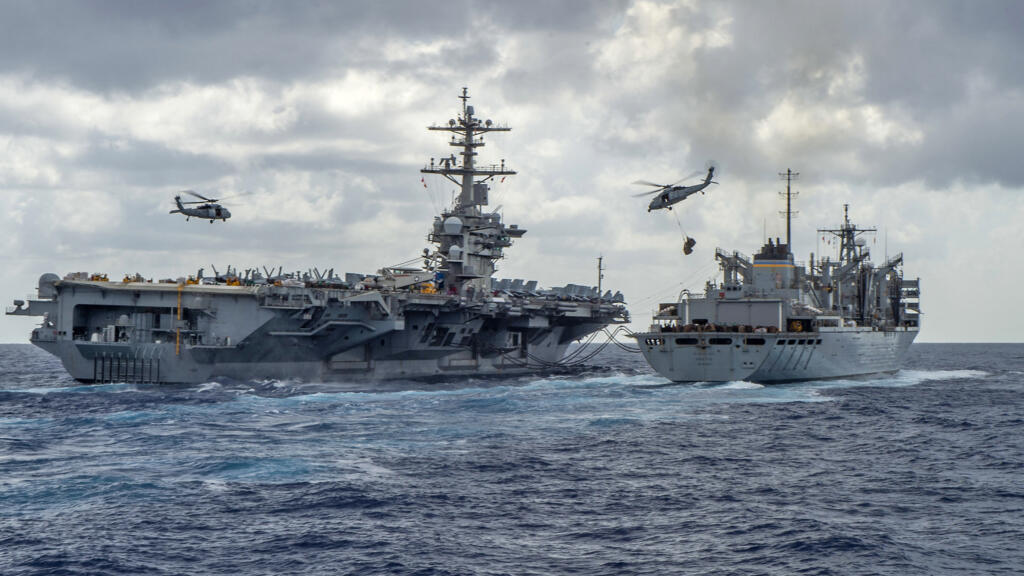
United States President Donald Trump dismissed concerns regarding severe operational fatigue among sailors aboard the aircraft carrier USS Abraham Lincoln on Friday, August 14, 2026. The vessel completed an unprecedented deployment lasting nearly nine months to support military operations against Iran, sparking widespread reports of acute mental health strain.
Key Facts of the Naval Deployment
- The aircraft carrier USS Abraham Lincoln completed a continuous deployment of nearly nine months.
- The extended tour directly supports United States military operations targeting Iran.
- Internal reports indicate that active-duty sailors face severe mental health and operational fatigue challenges.
- President Donald Trump explicitly stated that the record-breaking tour length was insufficient for mission requirements.
- Naval logistics and manpower constraints face intense scrutiny amid prolonged Middle East operations.
Operational tempos for naval strike groups have escalated dramatically over the past decade. Modern carrier strike groups rely on complex technological networks and tight rotation schedules to maintain deterrence. When deployments stretch beyond standard six-month windows, mechanical systems and personnel absorb unsustainable stress. The USS Abraham Lincoln deployment highlights friction between strategic objectives and the physical limits of naval assets.
Sustaining high-intensity combat operations in the Middle East demands a continuous presence from capital warships. Naval architects design aircraft carriers for multi-decade lifespans, yet prolonged saltwater environments and relentless flight deck operations accelerate wear. Maintenance backlogs at domestic shipyards frequently force the Pentagon to extend active tours. These extensions close regional coverage gaps but disrupt the maintenance lifecycle of multi-billion-dollar hardware.
The human cost of extended deployments extends beyond simple fatigue. Sailors aboard modern warships operate in hyper-connected, high-pressure environments where sleep deprivation degrades cognitive performance. Mental health professionals within the Department of Defense warn that prolonged separation triggers anxiety, depression, and long-term retention crises. Experienced sailors leave active service prematurely when operational demands breach established guidelines.
Military analysts evaluate force readiness through operational availability and personnel retention. Every month a carrier spends deployed beyond its scheduled window delays its return to dry dock for nuclear refueling and complex overhauls. This dynamic creates a deficit in future fleet availability. Strategic planners must weigh immediate deterrence against the long-term degradation of naval combat power.
Leadership decisions at the highest levels of government shape military culture and force readiness. Political directives overriding institutional safety margins generate friction with senior naval commanders. These commanders balance aggressive strategic signaling against crew safety. The public dismissal of sailor fatigue signals a shift toward prioritizing immediate tactical presence over personnel sustainability.
The strategic trajectory of Middle East naval operations remains uncertain amid persistent regional tensions. Future defense budgets will likely reflect the mounting costs of maintaining continuous carrier presence near contested waterways. Autonomous surface vessels and long-range uncrewed aerial systems may eventually reduce reliance on human-crewed capital ships. Until those systems achieve full capability, power projection will continue to rely on deployed sailors and aging hulls.
Historical Context and Structural Strain
The trend of extending naval deployments has accelerated sharply since the turn of the decade. Historically, six-month cycles served as the standard for maintaining a rested force and preserving mechanical integrity. However, geopolitical flashpoints in the Middle East, Eastern Europe, and the Indo-Pacific have placed unprecedented demands on a shrinking fleet. The U.S. Navy operates fewer hulls than during the late Cold War, yet global commitments have multiplied. This structural mismatch forces the Pentagon to rely on deployment extensions as a stopgap measure, trading future fleet health for immediate presence.
Stakeholder analysis reveals a deep divide between civilian leadership, naval commanders, and the enlisted force. While civilian decision-makers prioritize visible deterrence against Iran, enlisted personnel bear the physical and psychological toll. Furthermore, naval shipyards plagued by labor shortages and maintenance backlogs face compounding pressure when extended deployments disrupt synchronized dry-dock schedules. A single delayed carrier return cascades into a multi-year maintenance bottleneck.
Looking ahead over the next 6 to 12 months, the precedent set by the USS Abraham Lincoln deployment suggests prolonged carrier tours may become a recurring reality. If regional tensions remain elevated, defense planners will likely continue overriding personnel rotation guidelines. This trajectory risks accelerating attrition rates among skilled technicians, nuclear operators, and aviators who exit military service rather than endure indefinite extensions.
Comparative analysis with other military branches underscores the unique vulnerability of naval forces. Unlike land-based units that can rotate personnel via commercial transport while leaving heavy equipment in theater, an aircraft carrier is an integrated ecosystem. You cannot easily swap out a tired crew in a hostile combat zone without pulling the entire capital asset off station.
To mitigate these structural challenges, the Department of Defense is heavily investing in force multiplication technologies. Autonomous surface vessels, uncrewed aerial vehicles, and artificial intelligence-driven logistics platforms are currently undergoing rapid testing. These innovations aim to distribute maritime surveillance across a larger network of unmanned systems. However, experts caution that true replacement of nuclear-powered carriers remains decades away. Until autonomous systems achieve the reliability required for high-intensity combat, maritime defense will continue to rest on human-crewed capital ships and the resilience of sailors.
Source: Original Article
Leave a Reply