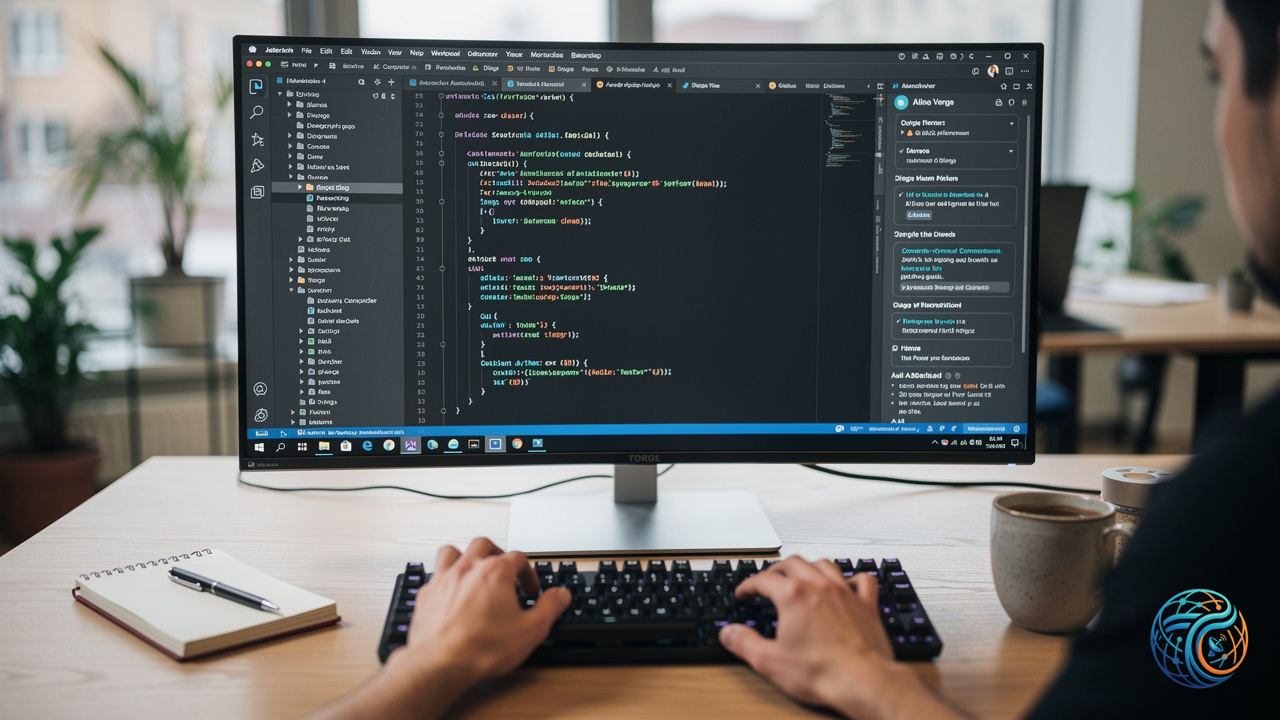
JetBrains has highlighted how its integrated development environment, PyCharm, adapts to support AI-assisted Django workflows amid surging automation across modern software engineering. According to preliminary findings from the upcoming 2026 Django Developers Survey, 90.0% of respondents now incorporate AI tools into their regular development routines. The initiative underscores the necessity of developer oversight, static analysis, and framework-level validation when deploying machine-generated code.
The Shifting Reality of Django Web Development
The Django framework has long provided built-in solutions for object-relational mapping (ORM), authentication, routing, and administrative interfaces. However, the introduction of autonomous code generation tools and AI coding assistants has introduced structural complexities to standard development patterns.
While generative models produce boilerplate code, endpoints, and test suites in seconds, synthesis speed does not guarantee structural correctness. JetBrains emphasizes that software engineers remain solely responsible for the architecture, security, and production reliability of their applications.
- High AI Adoption: Nine out of ten Django developers now rely on AI assistants on a weekly or daily basis.
- Verification Imperative: Rapid code generation requires robust evaluation mechanisms to catch subtle logic and security regressions.
- Developer Accountability: Engineers retain full responsibility for production stability, compliance, and overall software architecture.
Why the IDE Matters More in the AI Era
As AI agents assume drafting responsibilities, the primary role of the developer transitions from manual typing to code review, verification, and system orchestration. Specialized tooling inside an IDE becomes essential for maintaining daily engineering productivity.
Within complex frameworks like Django, raw AI output often contains subtle discrepancies that generic text editors fail to expose. PyCharm bridges this gap through deep static analysis, framework-aware indexing, and integrated verification tools.
Navigating Complex Django Architectures
Django applications rely on tight couplings between database models, view controllers, URL dispatchers, and template engines. When AI suggests modifications to querysets or database schemas, developers must evaluate how those changes impact data integrity across the entire project.
PyCharm assists developers in evaluating AI-generated contributions through specialized capabilities:
- ORM and Model Introspection: Immediate feedback on model fields, relationships, and migration consistency.
- Template and View Validation: Real-time cross-referencing between template tags, context dictionaries, and backend logic.
- Integrated Debugging and Profiling: Deep runtime inspection to identify performance bottlenecks and unoptimized database queries generated by AI tools.
- Automated Test Execution: Seamless test runners to verify that generated logic meets existing domain specifications.
Ensuring Quality and Security in Production
The acceleration of development cycles introduces operational risks if generated code reaches production without thorough inspection. Unindexed database lookups, insecure object references, and misconfigured middleware can compromise codebases if automated suggestions are accepted uncritically.
By combining AI generation with the structural safeguards of PyCharm, developers can maintain rapid iteration cycles while preserving code hygiene. The consensus within the Django community indicates that while AI assists in creation, developer competence and comprehensive IDE toolsets remain the ultimate safeguards of software reliability.
Source: Original Article