
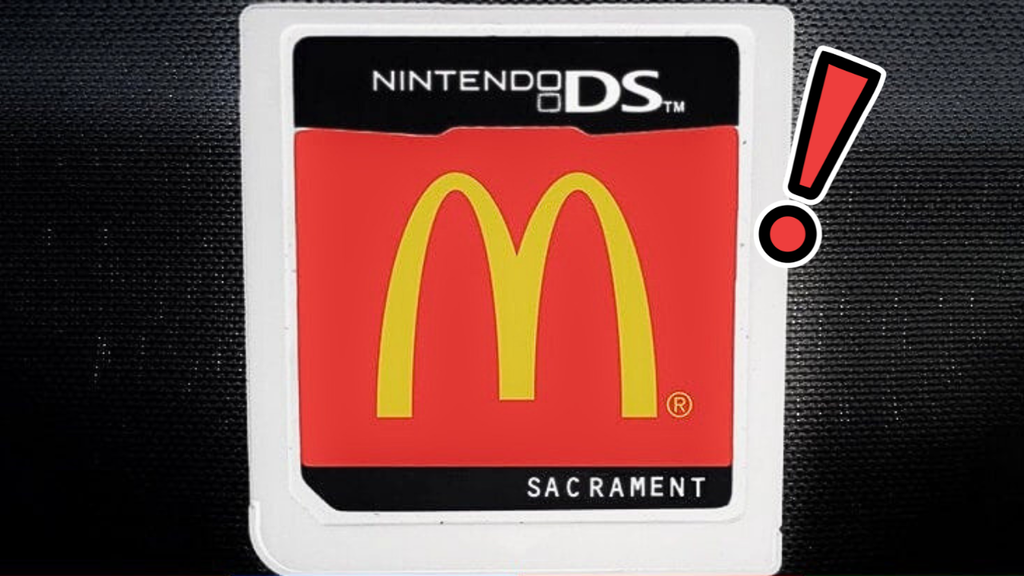
A rare Nintendo DS software cartridge developed exclusively for internal corporate training by McDonald’s has surfaced within retro gaming archiving communities. This proprietary application, distributed strictly to franchise locations during the handheld console lifecycle, remains entirely inaccessible to retail consumers and commercial collectors. First reported by French gaming outlet Jeuxvideo in October 2023, the physical discovery has sparked intense interest across digital preservation circles regarding how enterprise hardware escapes standard corporate destruction protocols.
Key Facts About the Rare McDonald’s DS Cartridge
- The software functioned as an interactive digital training manual for restaurant employees operating fryers, cash registers, and food assembly stations during the mid-2000s.
- Nintendo manufactured these specialized cartridges under strict corporate orders, ensuring zero public retail distribution through standard commercial channels or game stores.
- Units featured distinct physical shell colorations or custom labeling to prevent theft, loss, or confusion with standard retail game cartridges on franchise premises.
- The program required specific handheld hardware configurations utilized by franchise management to track employee module completion rates and operational proficiency.
- Discovery of the physical media occurred through secondary electronic waste salvage operations rather than authorized corporate asset liquidation or public auctions.
Corporate Edutainment and Internal Hardware Context
Global fast-food corporations historically invested heavily in bespoke interactive media to streamline employee onboarding procedures. During the mid-2000s, portable dual-screen hardware offered an ideal platform for simulation-based learning without tying down stationary desktop terminals in busy back-office environments. McDonald’s utilized customized software across various platforms, but portable console cartridges represent an exceptionally scarce subset of corporate hardware history.
Software engineers designed these applications to mimic fast-paced service environments. Employees practiced order accuracy and timing metrics through gamified modules. This approach reduced operational friction during peak dining hours by familiarizing new hires with kitchen layouts before touching actual commercial equipment. By leveraging mainstream gaming hardware, corporations avoided the high costs of developing proprietary training terminals from scratch.
The Mechanics of Industrial Secrecy
Protecting proprietary operational workflows dictated the strict distribution model surrounding these cartridges. Corporations maintain rigid control over internal training assets to prevent competitors from reverse-engineering proprietary efficiency metrics, kitchen layouts, and speed-of-service optimization strategies. Consequently, hardware manufacturers like Nintendo implemented strict non-disclosure safeguards during production runs to prevent unauthorized leaks.
Physical destruction protocols typically governed obsolete corporate training media. When franchise locations upgraded their internal digital infrastructure—shifting away from cartridge-based systems toward networked PCs and cloud modules—standard operating procedure mandated the shredding or secure recycling of specialized cartridges. Surviving units represent procedural anomalies where hardware escaped standard corporate disposal chains, often rescued by former employees or electronics recyclers.
Archival Challenges in the Digital Age
Digital preservationists face severe legal and technical hurdles when documenting proprietary software assets. Copyright holders retain perpetual ownership over commercial code, regardless of whether the software remains actively utilized or commercially viable. Dumping ROM data from industrial cartridges requires specialized hardware dumpers capable of bypassing proprietary encryption schemes and custom memory mappings.
Museums and digital preservation groups prioritize these artifacts because they document the convergence of mainstream consumer electronics and industrial workforce management. Without proactive archiving, significant chapters of corporate software development vanish permanently when physical flash memory degrades or gets incinerated in e-waste facilities.
Stakeholder Analysis and Industry Impact
The uncovering of this cartridge affects multiple stakeholders across the tech and gaming landscapes. For retro gaming collectors, it represents the ultimate holy grail of corporate media. For preservationists, it highlights the precarious nature of non-retail software history. Conversely, corporate legal departments view these leaks with caution, as proprietary workflows risk exposure despite being obsolete by modern standards.
Looking ahead over the next 6 to 12 months, expect retro archiving groups to successfully dump and analyze the ROM data, providing public documentation of how fast-food giants trained their staff two decades ago. However, aggressive intellectual property enforcement from multinational corporations will likely keep these ROMs out of mainstream distribution networks, confining them to private archival repositories.
Market Valuation and Collector Demand
The scarcity of enterprise-exclusive media drives intense speculation within elite retro gaming collector circles. Unlike mass-produced entertainment titles, internal software assets possess no official market price baseline. Collectors often view industrial prototypes and corporate training tools as elite acquisitions due to their extreme physical scarcity.
High demand clashes directly with corporate intellectual property enforcement. Software publishers frequently issue legal takedown notices or demand the return of leaked corporate assets. This dynamic creates a secretive underground trading ecosystem operating entirely outside mainstream auction platforms, where items change hands privately among high-net-worth enthusiasts.
Future Outlook for Enterprise Artifacts
As modern enterprises transition entirely to cloud-based training dashboards and mobile device management apps, physical corporate cartridges will become extinct relics of a transitional technological era. Future preservation efforts will rely heavily on cloud scraping, server archaeology, and corporate database backups rather than recovering physical plastic cartridges from e-waste bins.
Documenting these physical software remnants remains essential for mapping the evolution of digital employee training. As physical media continues to phase out of corporate environments, preserving these rare Nintendo DS cartridges ensures that a quirky intersection of fast-food operations and video game history is not lost to time.
Source: Original Article